
King Penguin
Aptenodytes patagonicus
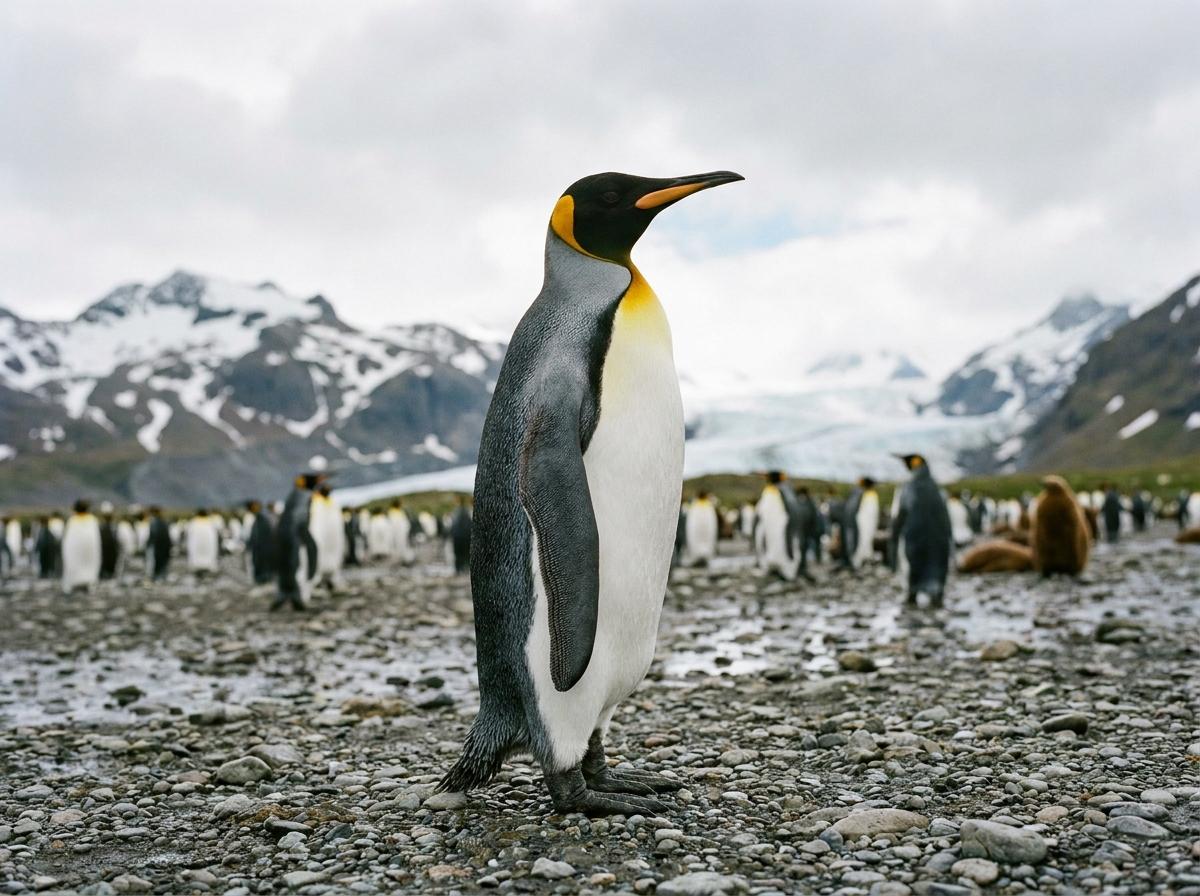
The king penguin, Aptenodytes patagonicus, is the second-largest penguin after the emperor penguin. It breeds on subantarctic islands and nearby cold-temperate coasts, forming dense colonies where adults stand upright with a single egg balanced on their feet. The species is recognized by its sleek gray back, white belly, black head, and bright orange-yellow markings along the neck and ear patches. At sea, king penguins are deep-diving hunters that feed heavily on lanternfish, squid, and other small marine prey.
Zoos and aquariums that keep king penguins manage them as cool-climate, colony-living seabirds rather than display animals alone. Successful care depends on chilled, clean air and water, non-slip nesting areas, careful fish handling, and stable social groups that allow pair formation and chick rearing. Their long breeding cycle can stretch well over a year, so colony records and timing matter. In the wild, monitoring programs track colony size, foraging range, prey availability, and climate-driven changes in the Southern Ocean, where warming seas and fisheries interactions can affect food supply.
Colors: Wild Type