

King Cobra
Ophiophagus hannah
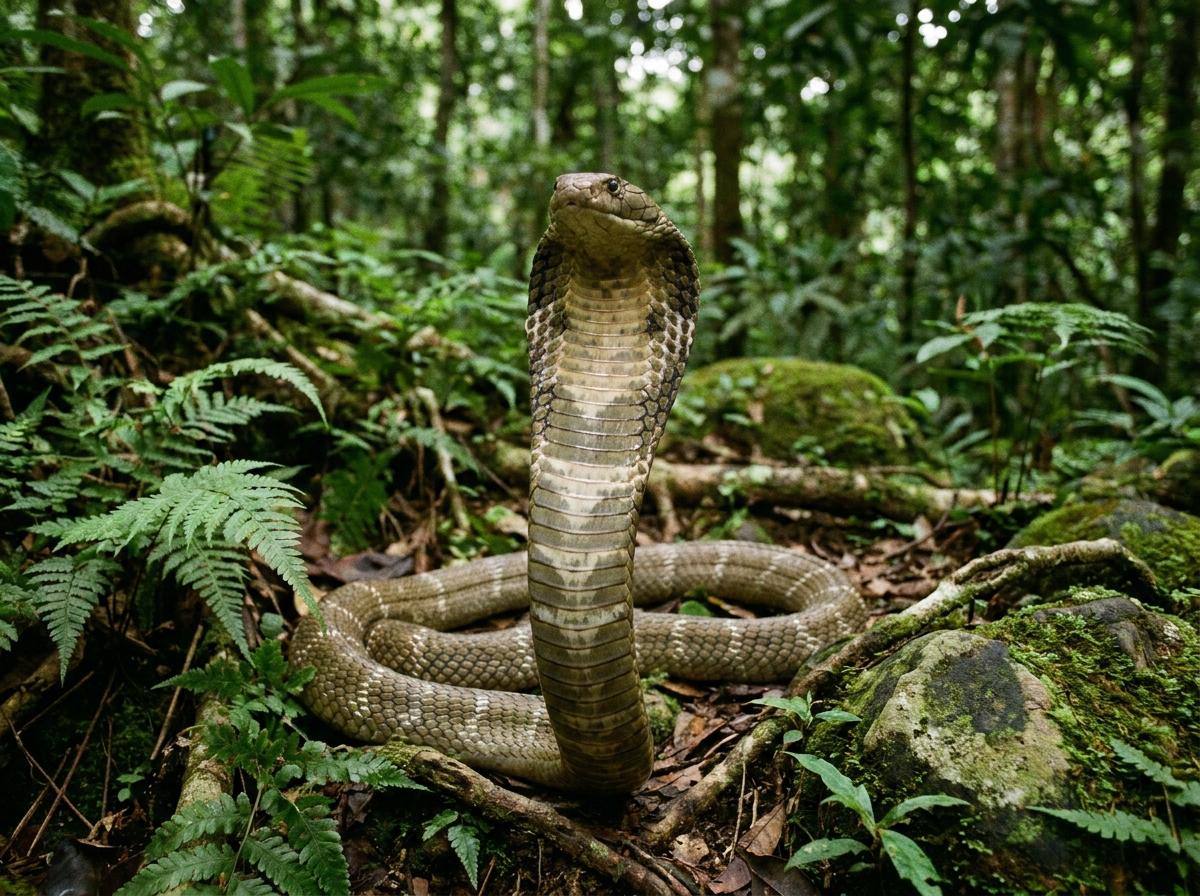
The king cobra, Ophiophagus hannah, is the world's longest venomous snake, native to forests, plantations, wetlands, and agricultural edges across South and Southeast Asia. Despite its common name, it is not a true cobra in the genus Naja. Adults are often olive, brown, black, or banded, with a narrow hood, large head, and an alert upright threat posture. Its scientific name reflects a major part of its diet: ophiophagus means snake-eating. Females are unusual among snakes for gathering leaf litter into a nest and guarding the eggs for part of incubation.
King cobras belong only in the hands of licensed venomous-snake professionals, research programs, or qualified zoological institutions. Their size, intelligence, defensive range, and medically significant venom require secure rooms, lockable caging, shift boxes, trained staff, and emergency plans that include appropriate antivenom access. Feeding can be more complicated than with rodent-eating snakes because many individuals prefer other reptiles. Conservation work focuses on habitat retention, reducing persecution, managing conflict around farms and villages, and curbing illegal collection for trade or display.
Colors: Albino, Banded, Black, Blue, Brown, Gray, Green, Leucistic, Melanistic, Olive, Orange, Red, Spotted, Striped, Tan, Wild Type, Yellow