


Jamaican Iguana
Cyclura collei
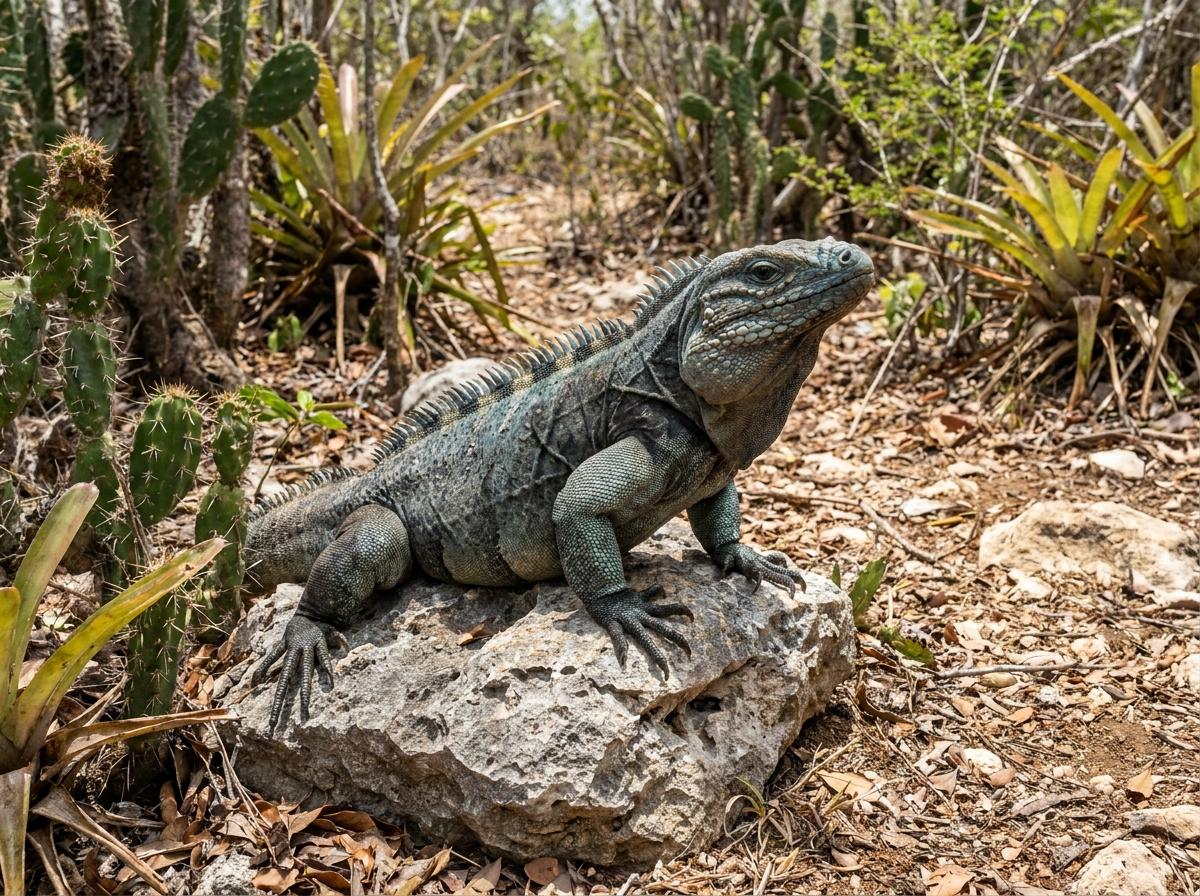
The Jamaican iguana (Cyclura collei) is a large rock iguana found naturally only in Jamaica, where it survives in the dry limestone forest of the Hellshire Hills. Once thought extinct, it was rediscovered in 1990 after a small remnant population was found. Adults are heavy-bodied gray to olive lizards with a spiny dorsal crest, strong jaws, and a mostly herbivorous diet of leaves, flowers, fruits, and native browse. As with other Cyclura iguanas, adults need sunny open areas for basking and suitable sandy or friable soil for nesting.
This species is a conservation animal, not a normal pet trade reptile. Management has relied on nest monitoring, predator control, habitat protection, and a head-start program in which young iguanas are raised until they are large enough to survive mongoose and cat predation more often. Zoos have supported breeding, veterinary work, and genetic management for future security. Captive or assurance-colony husbandry requires strong enclosures, intense heat and ultraviolet exposure, and a plant-based diet matched to an iguana that can live for decades. Protecting the remaining dry forest from development, charcoal production, and invasive mammals remains central to its recovery.
Colors: Albino, Banded, Black, Blue, Brown, Gray, Green, Leucistic, Melanistic, Olive, Orange, Red, Spotted, Striped, Tan, Wild Type, Yellow