


Indian Vulture
Gyps indicus
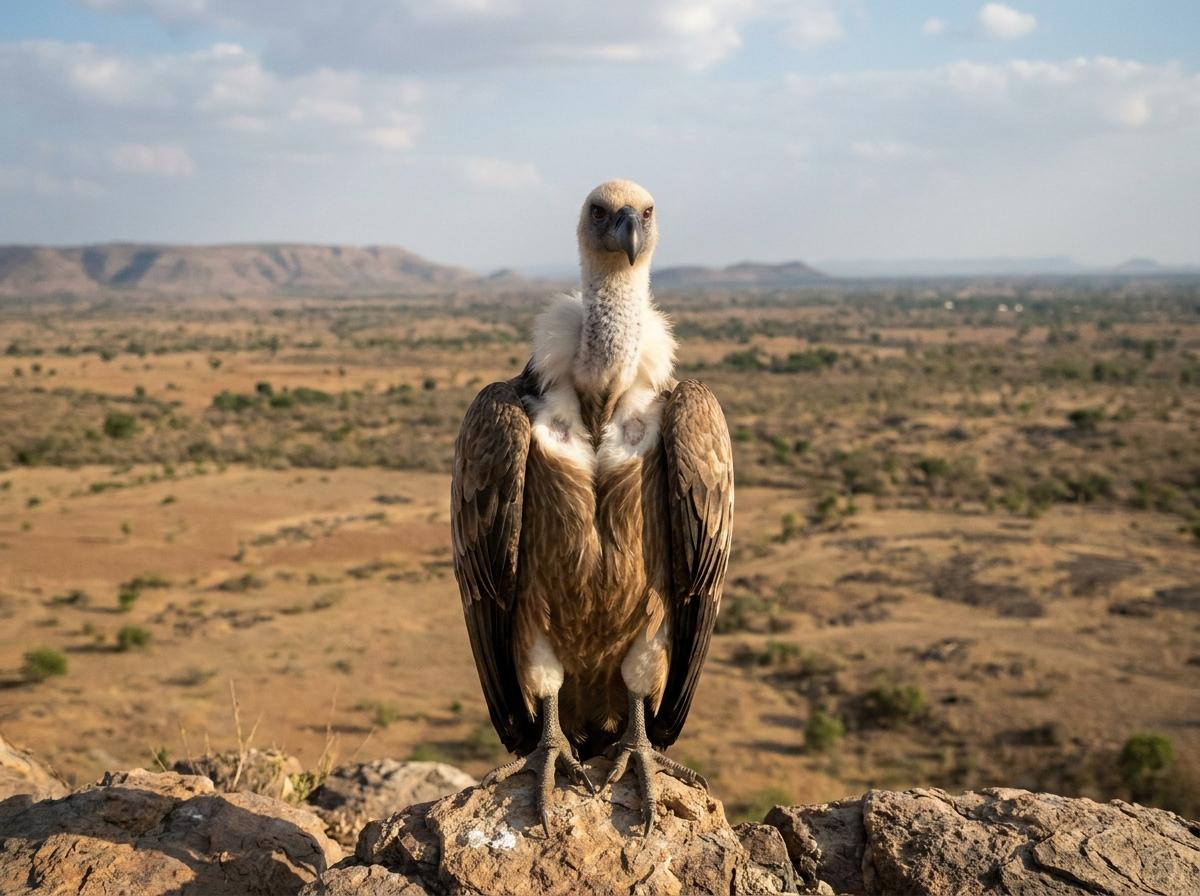
The Indian vulture (Gyps indicus) is a cliff-nesting Old World vulture of the Indian subcontinent, built for soaring over open country in search of livestock and wild-animal carcasses. It has broad wings, a pale body, dark flight feathers, and a mostly bare head and neck that stay cleaner while feeding. Like other Gyps vultures, it depends on finding carrion quickly and feeding in groups, a behavior that once made it one of the region's most visible scavengers.
Conservation work now defines nearly all human involvement with this species. Indian vultures suffered catastrophic declines after feeding on carcasses of cattle treated with veterinary diclofenac, a drug that causes fatal kidney failure in Gyps vultures. Recovery efforts include safer livestock medicines, vulture-safe zones, carcass monitoring, nest protection, and captive breeding centers that maintain birds for future reinforcement. Zoos and specialist facilities require large quiet aviaries, safe perches and cliffs or platforms, and carefully sourced carcass diets free of harmful veterinary drugs. Rehabilitation is uncommon and specialized, but every surviving colony is important for restoring scavenging services.
Colors: Black, Black and White, Brown, Cream, Gray, Orange Head, Pink Head, Red Head, Tan, White, Wild Type, Yellow Head