

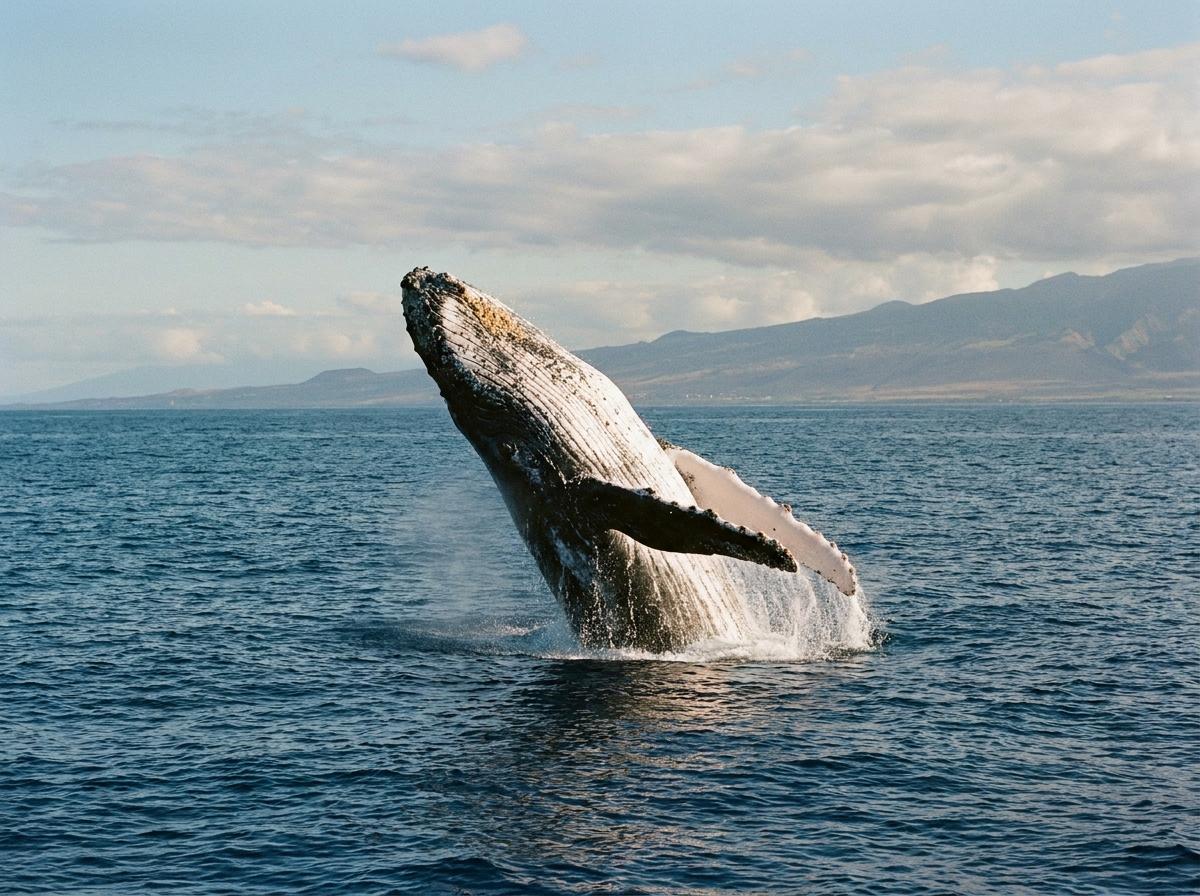
Humpback Whale
Megaptera novaeangliae
The humpback whale, Megaptera novaeangliae, is a large baleen whale found in oceans worldwide, with long pectoral fins, a knobbly head, and a powerful tail fluke often photographed during dives. Many populations migrate between high-latitude feeding grounds and warmer breeding areas. Humpbacks feed by filtering schooling fish and krill, sometimes using coordinated bubble-net feeding, and males produce complex songs that change through time within breeding regions.
Humpback whale stewardship is carried out through conservation, research, and conflict reduction rather than ownership. Whale-watching operators, researchers, and coastal agencies identify individuals through fluke photographs, songs, satellite tags, and sighting records. Major welfare concerns include ship strikes, entanglement in fishing gear, underwater noise, and disturbance around mothers with calves. Recovery has been strong in some oceans since commercial whaling declined, while other populations still need close monitoring. Responsible tourism keeps distance, limits approach time, and treats each sighting as a wild-animal encounter rather than a performance.
Colors: Wild Type