

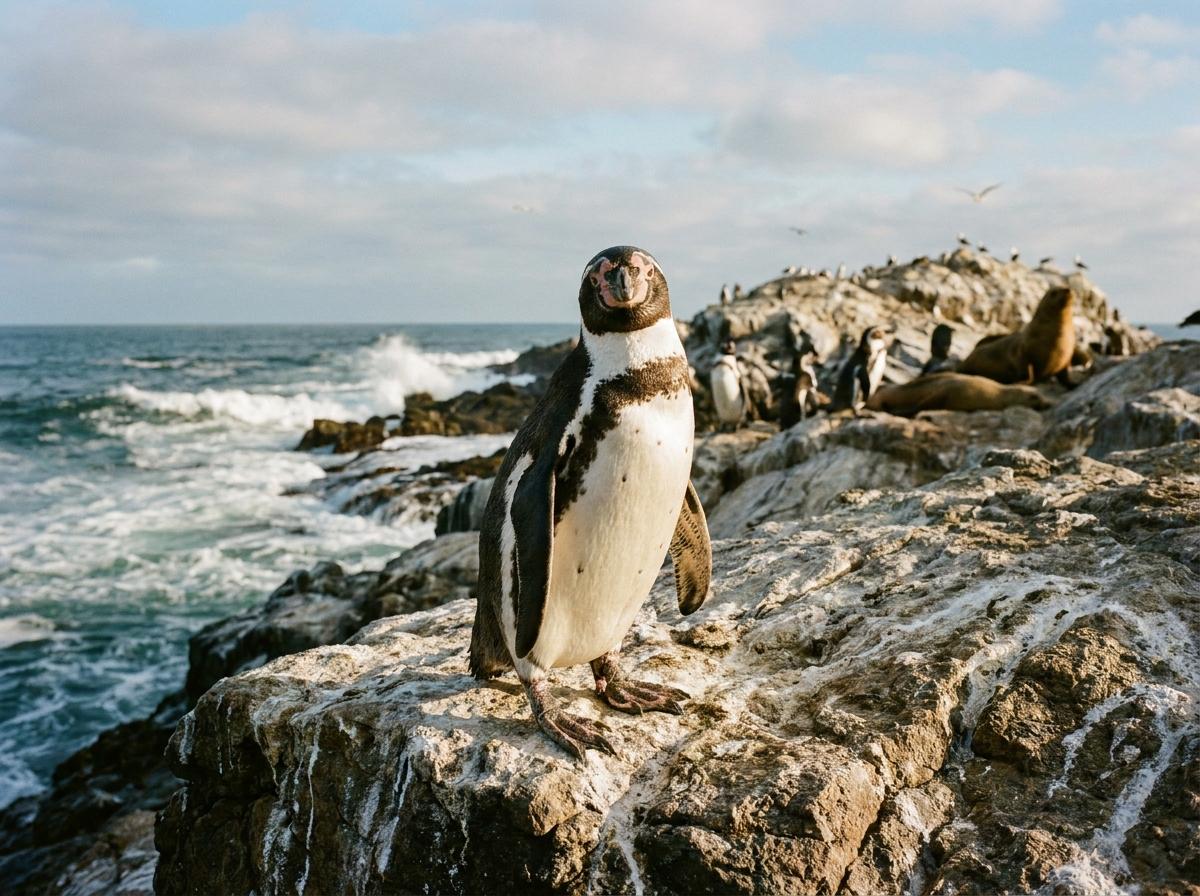
Humboldt Penguin
Spheniscus humboldti
The Humboldt penguin is a medium-sized banded penguin from the cool Pacific coast of Peru and Chile, where the Humboldt Current supports rich fisheries. Spheniscus humboldti has a black back, white front, dark chest band, and bare pinkish skin around the bill that helps with heat exchange. In the wild it nests in burrows, caves, rocky cracks, or old guano deposits rather than on open ice, which separates it from the polar image many visitors have of penguins. Anchovies, sardines, and similar schooling fish form much of its diet.
Zoos and conservation centers manage Humboldt penguins with chilled or temperate pools, dry nesting areas, stable pair records, and close attention to foot health, molt, and fish quality. Breeding programs track parentage because pairs may be long term but colony management still needs genetic balance. Field concerns include fishery pressure, bycatch, guano extraction, coastal disturbance, and climate-linked food shifts. Public exhibits can help visitors connect an active, vocal colony with practical conservation actions, but behind the scenes the work is routine and detailed: weighed fish, water testing, nest checks, band reading, and careful observation of social changes.
Colors: Black, Black and White, Brown, Gray, Orange, White, Wild Type, Yellow Accent