


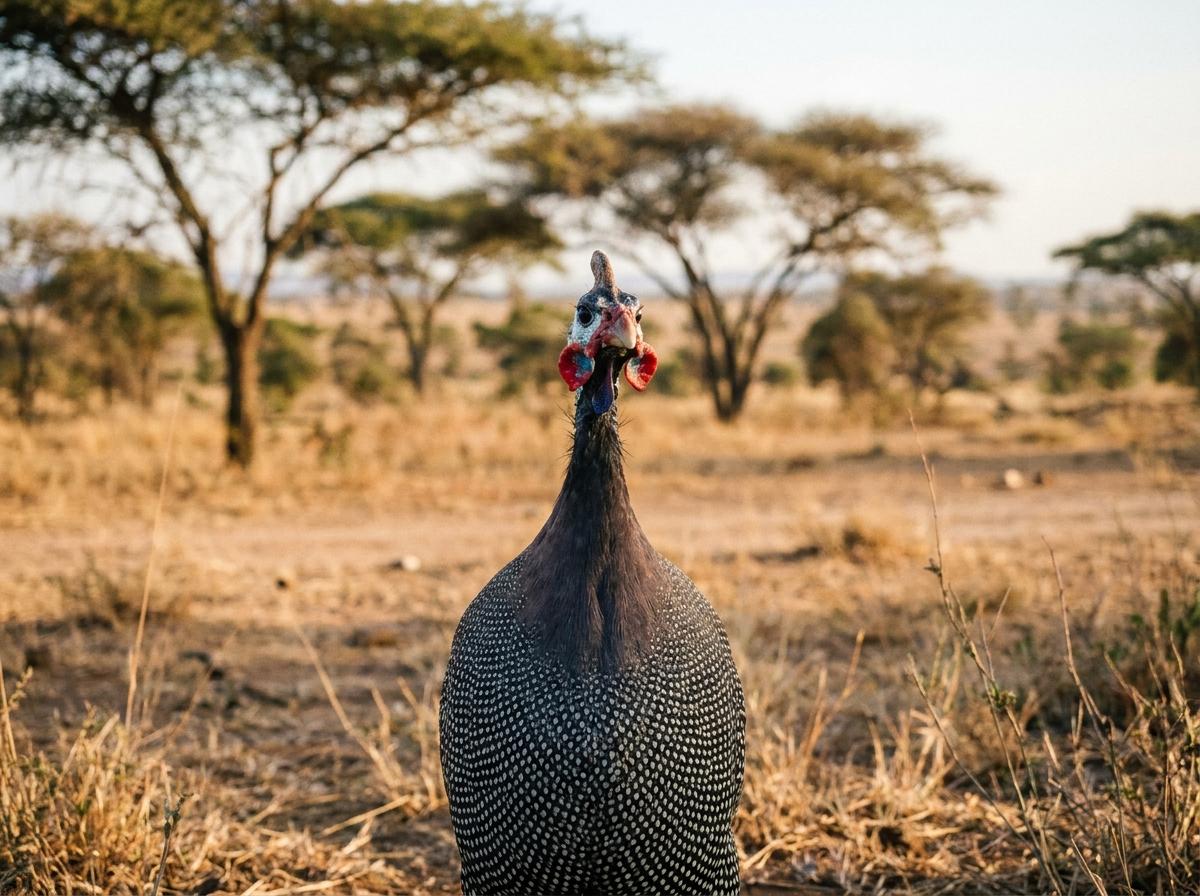
Helmeted Guineafowl
Numida meleagris
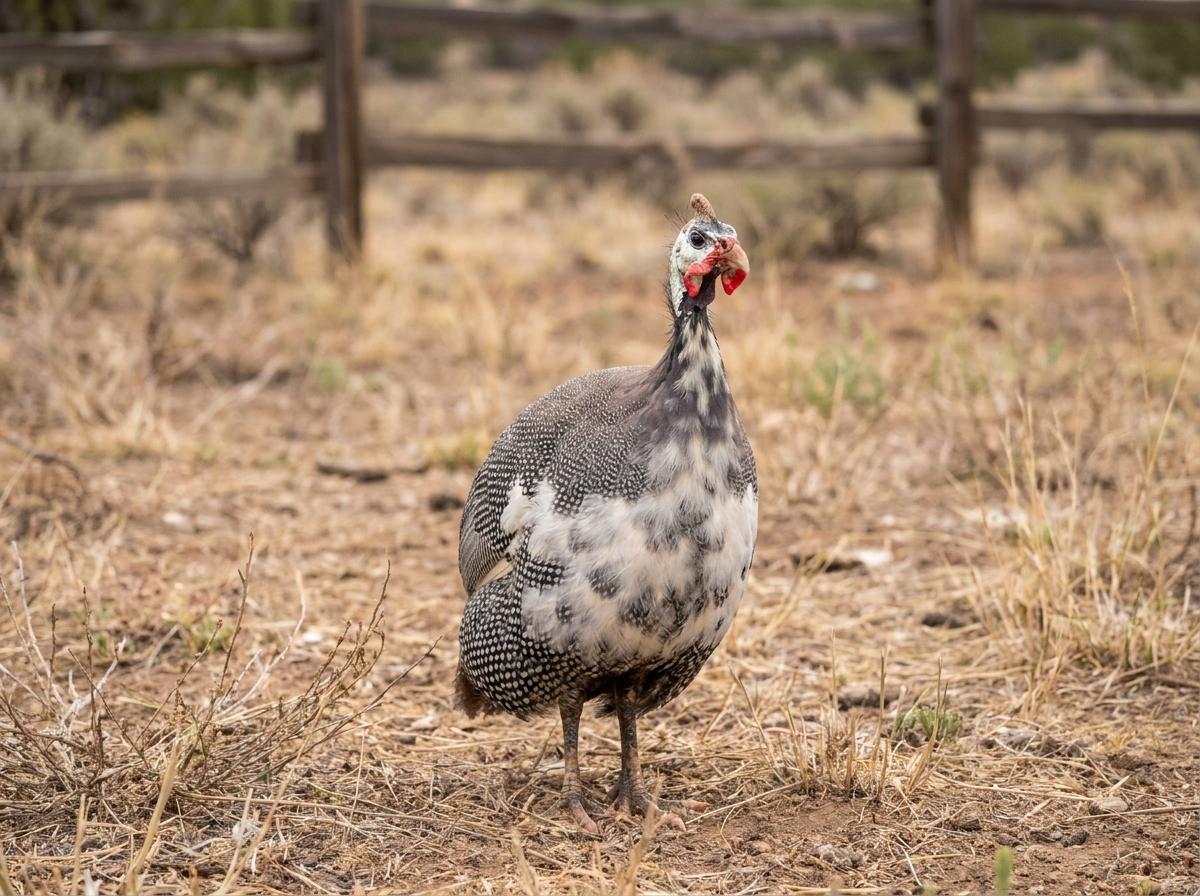
The helmeted guineafowl is the wild ancestor of most domestic guinea fowl, a ground-foraging African bird recognized by pearl-gray plumage, a bony casque on the head, bare blue-white facial skin, and red wattles. Wild flocks range through savannas, scrub, and open woodland across much of Africa south of the Sahara, roosting in trees and moving on foot to feed on seeds, greens, insects, and small invertebrates. Domestic lines keep the same alert, flocking temperament and loud calls, with several color varieties developed in poultry keeping.
On farms and acreages, guineafowl are kept for meat, seasonal eggs, alarm calling, and insect patrol, though they are not a quiet substitute for chickens. New birds usually need a secure coop period before free-ranging, and even trained adults may wander, fly over fences, or lay hidden nests. Keets are more fragile than chicks in cold or damp brooders and benefit from warm, dry housing and a higher-protein starter. Predator protection, neighbor tolerance, and realistic expectations about noise are the main buyer considerations.