


Greater Flamingo
Phoenicopterus roseus
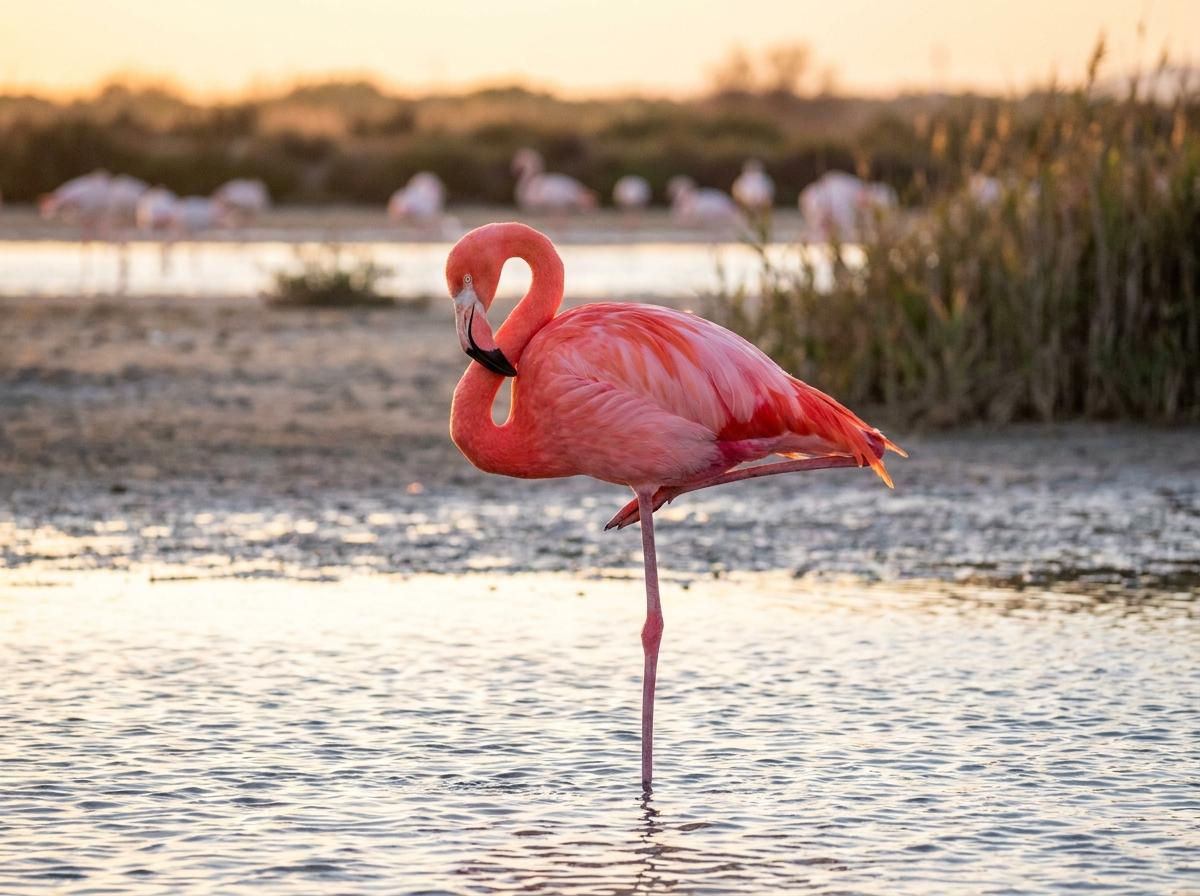
The greater flamingo is the largest and most widespread flamingo, a tall waterbird of shallow saline and alkaline wetlands across Africa, southern Europe, the Middle East, and parts of South Asia. Adults are pale pink to whitish with coral wing coverts, black flight feathers, long pink legs, and a heavy down-curved bill used upside down to sieve algae, brine shrimp, mollusks, and other small aquatic food. Large breeding colonies build conical mud nests on open flats, where both parents incubate one egg and feed the chick with crop milk.
Zoos and bird parks keep greater flamingos as flock birds rather than pairs, because courtship and nesting are encouraged by group size, open sightlines, and suitable mud or artificial nest mounds. Managed diets usually include formulated flamingo pellets with carotenoids to maintain plumage color, along with clean shallow water that protects sensitive feet. In the wild, stewardship centers on protecting salt pans, lagoons, estuaries, and inland wetlands from disturbance and pollution. Water diversion and poorly timed salt or soda ash extraction can also affect feeding and nesting sites.
Colors: Wild Type