



Great Horned Owl
Bubo virginianus
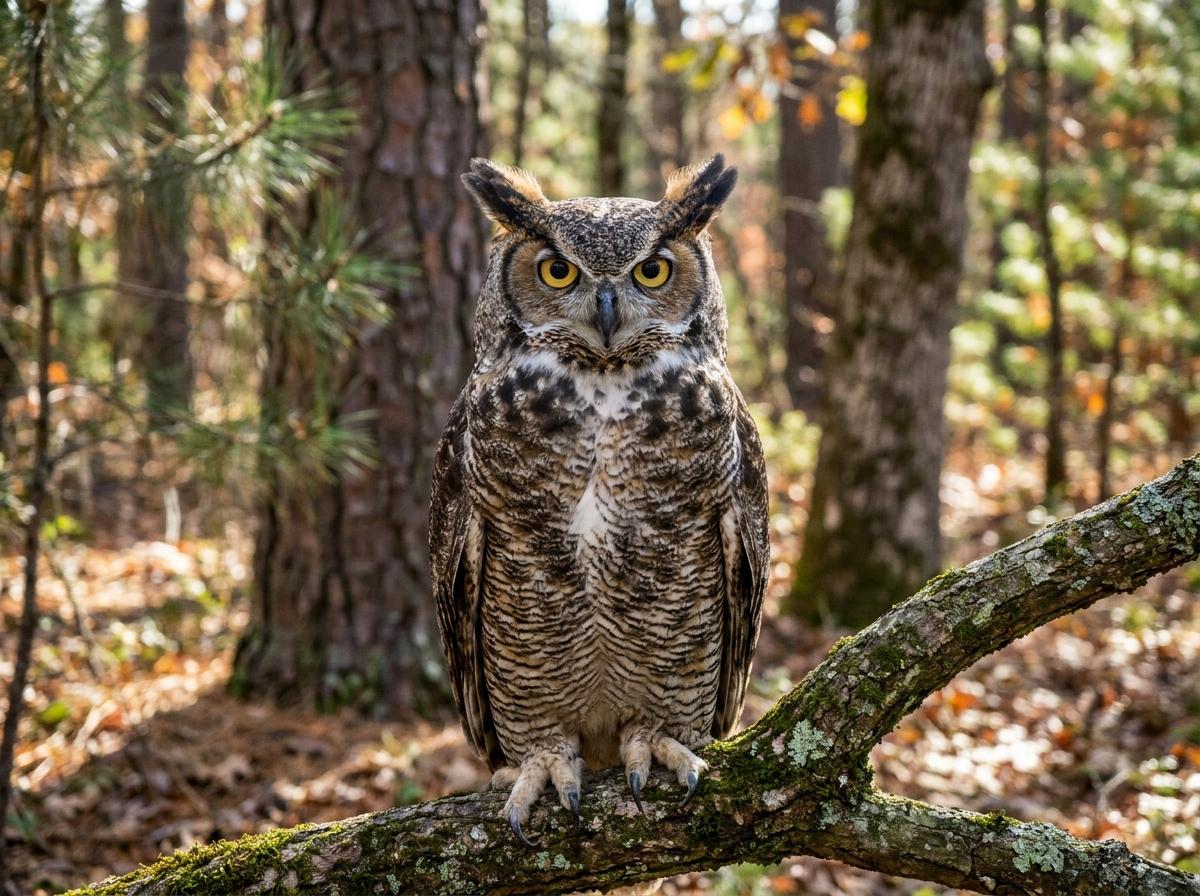
Ear tufts give the great horned owl, Bubo virginianus, its familiar horned outline, though the tufts are feathers rather than horns. This large owl ranges across much of North, Central, and South America and is recognized by yellow eyes, a white throat patch, barred underparts, and a deep four- or five-note hoot. Adaptable pairs nest in forests, deserts, wetlands, city parks, and farm country, usually taking over old hawk, crow, raven, or squirrel nests. Prey ranges from rabbits and rodents to birds, reptiles, and skunks.
Because great horned owls are protected native raptors in many places, they are not kept as pets. Licensed wildlife rehabilitators treat injured birds from vehicle strikes, window collisions, poisoning, and nest accidents; falconers in some jurisdictions and education centers may possess permitted birds, with education owls often nonreleasable. Captive care requires large weathering aviaries, minimal stress, whole-prey diets, and experienced handling to protect the bird's feet and the handler's hands. Landowners can help by leaving nest trees where safe, reducing rodenticide use, and keeping distance from occupied nests during the early breeding season.
Colors: Pale, Wild Type