


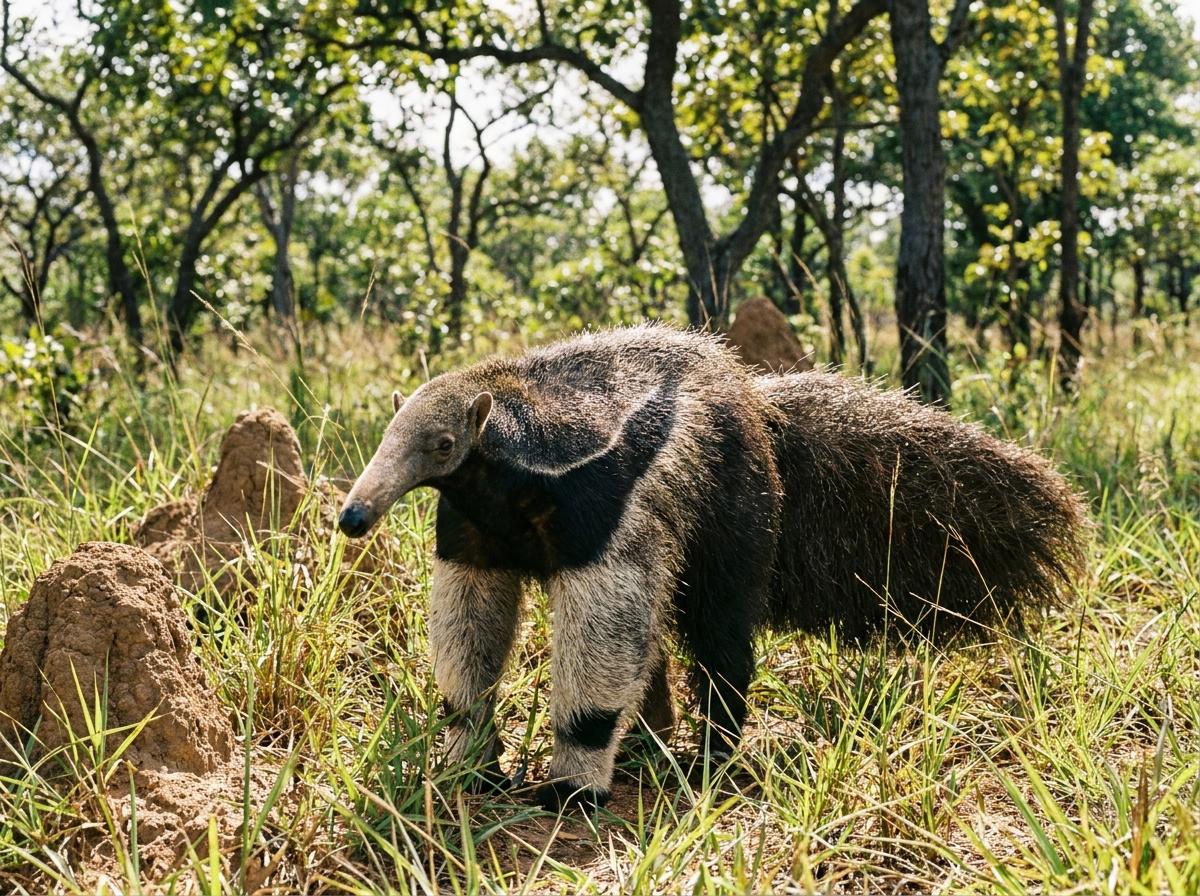
Giant Anteater
Myrmecophaga tridactyla
The giant anteater (Myrmecophaga tridactyla) is a large toothless mammal of Central and South American grasslands, savannas, wetlands, and forests. It has a long tubular snout, powerful forelimbs, curved claws, a bushy tail, and a narrow tongue specialized for taking ants and termites from nests. Its gait looks unusual because it walks on the sides of its forefeet to protect the claws. Despite the name, it is not closely related to true bears or aardvarks.
Giant anteaters are managed in zoos, sanctuaries, and field conservation programs, not as pets. Captive care requires space for walking, soft substrates, warm shelter, pools or wallows in some climates, and diets that replace thousands of daily insects with balanced insectivore mixtures. Keepers handle them cautiously because the front claws can cause severe injuries. Breeding programs watch compatibility, pregnancy, and mother-calf bonding; young ride on the mother's back. Wild management addresses road deaths, fires, habitat loss, dog attacks, and conflicts around farms or plantations.
Colors: Black, Brown, Cream, Gold, Gray, Leucistic, Melanistic, Mottled, Piebald, Red, Silver, Spotted, Tan, White, Wild Type