

European Seabass
Dicentrarchus labrax
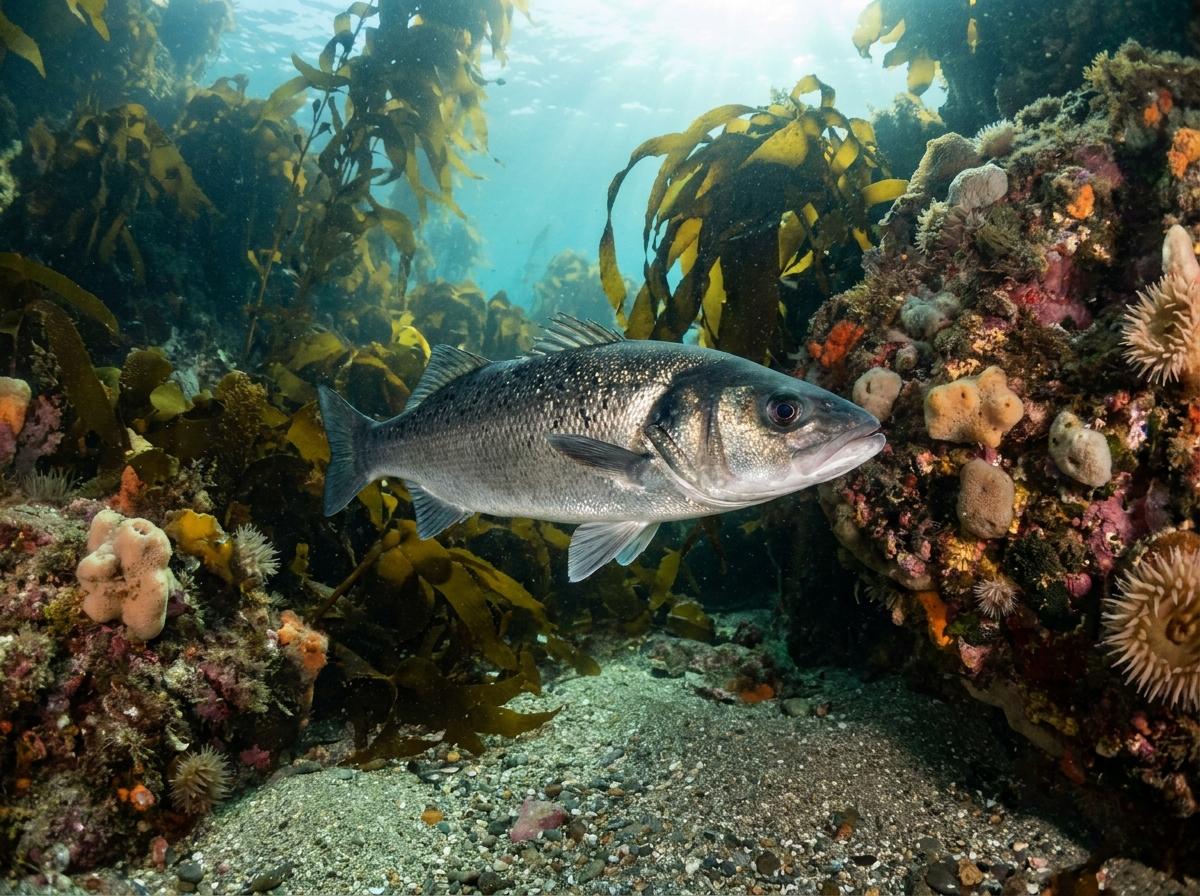
The European seabass, Dicentrarchus labrax, is a silvery predatory fish of the northeast Atlantic, Mediterranean, and Black Sea region. It is also sold and discussed as sea bass, bass, branzino, or loup de mer, depending on country and market. The species has a streamlined body, two dorsal fins, and a wide tolerance for salinity, allowing juveniles to use estuaries, lagoons, harbors, and coastal shallows. Adults feed on smaller fish, shrimp, crabs, and other marine animals, with spawning generally linked to cooler-season offshore waters.
European seabass is important in both wild fisheries and aquaculture. Farms raise it in sea cages, coastal ponds, and recirculating systems, where oxygen, stocking density, temperature, grading, and feed quality strongly affect health and growth. Hatcheries manage broodstock conditioning and delicate larval stages before juveniles are moved to grow-out facilities. Recreational anglers prize the species, but size limits, bag limits, and seasonal closures vary by area and are meant to protect spawning stocks. Buyers may see meaningful differences between line-caught wild fish and farmed seabass in size, fat content, and availability.