

European Bison
Bison bonasus
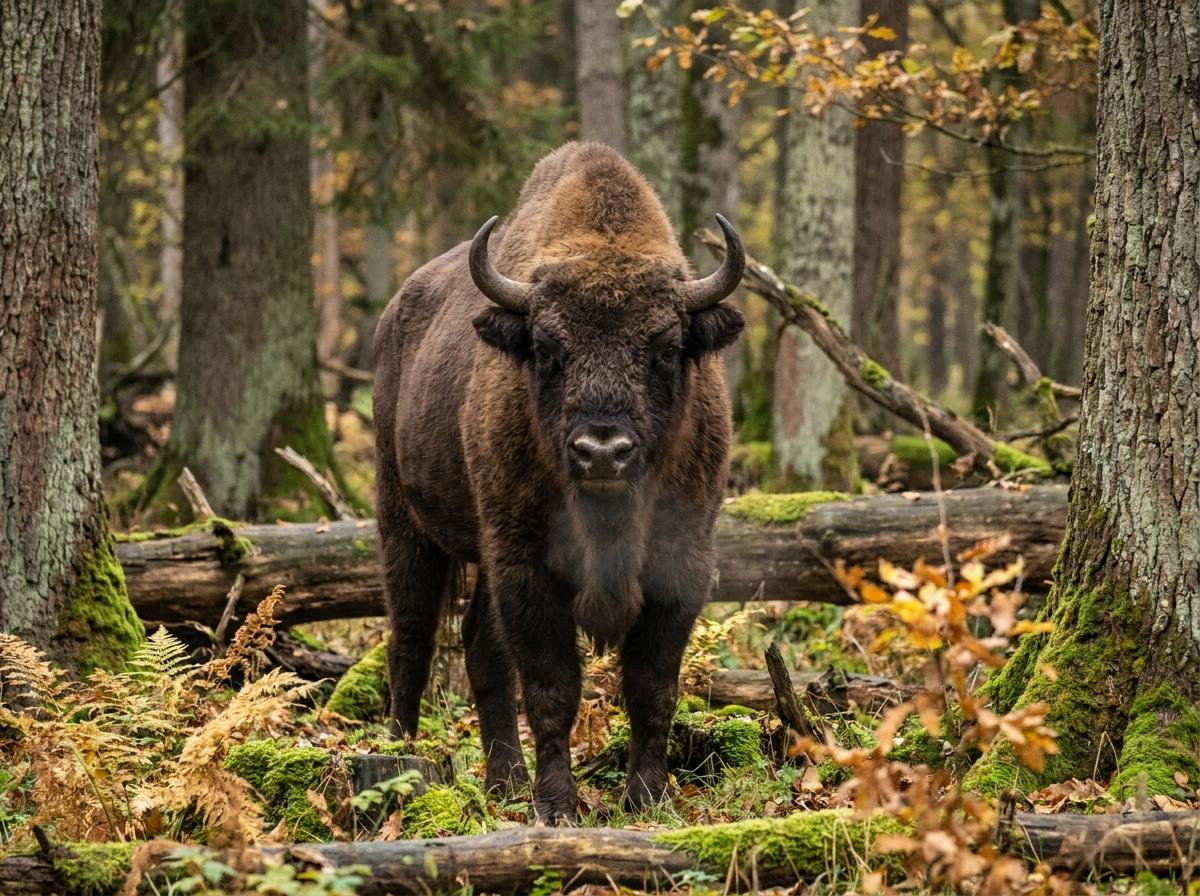
The European bison, Bison bonasus, also called the wisent, is Europe's heaviest native wild land mammal. It once ranged widely through forest and open woodland habitats, survived only in captivity in the early twentieth century, and has since been returned to reserves and free-ranging herds in several countries. Compared with the American bison, it tends to look taller and somewhat less front-heavy, with a high shoulder hump, short curved horns, and a thick beard. It grazes grasses but also browses leaves, shoots, bark, and shrubs.
European bison are managed as powerful wild cattle, not as tame farm stock. Reserves, breeding centers, and safari parks rely on strong fencing, calm handling systems, and herd plans that account for age, sex, genetics, and available forage. Conservation work still pays close attention to founder ancestry and disease risk because modern populations descend from a small number of animals. In landscapes where herds are reintroduced, managers balance public access, winter feeding policies, forest regeneration, crop damage, and contact with domestic cattle.