

Egyptian Uromastyx
Uromastyx aegyptia
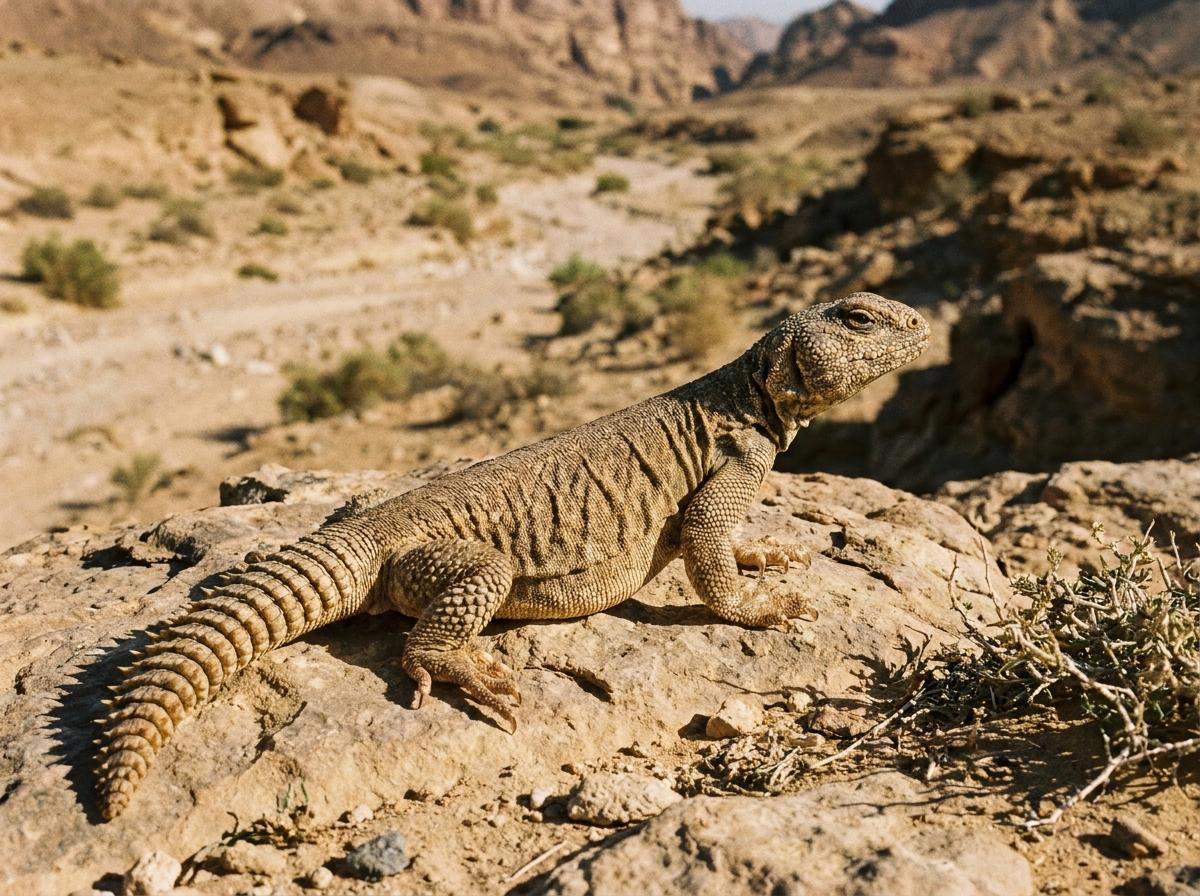
The Egyptian uromastyx (Uromastyx aegyptia), also called the Egyptian spiny-tailed lizard or dhubb, is one of the largest uromastyx lizards. It inhabits arid deserts, gravel plains, wadis, and rocky areas of North Africa and the Arabian Peninsula, where it shelters in deep burrows and basks in intense sun. The body is heavy and flattened, usually sandy gray to tan, with a thick tail armed with rings of spines used in defense at the burrow entrance. Adults are mainly herbivorous, feeding on tough desert plants, flowers, and seeds.
In captivity this is a specialist reptile because adult size and desert physiology leave little room for compromise. It needs a very large, dry enclosure, strong ultraviolet lighting, a high-temperature basking zone, secure hides, and substrate that supports natural digging without collapse. Diet is based on leafy greens, weeds, blossoms, and occasional seeds, with little or no animal protein. Buyers should ask about legal sourcing and captive-bred availability, since wild collection has affected some uromastyx populations and imported animals may arrive dehydrated or parasitized. Long-term keepers plan for slow growth, powerful digging, and a lizard that often tolerates observation better than frequent handling.
Colors: Blue, Green Variations, Orange, Red, Yellow