

Eastern Oyster
Crassostrea virginica
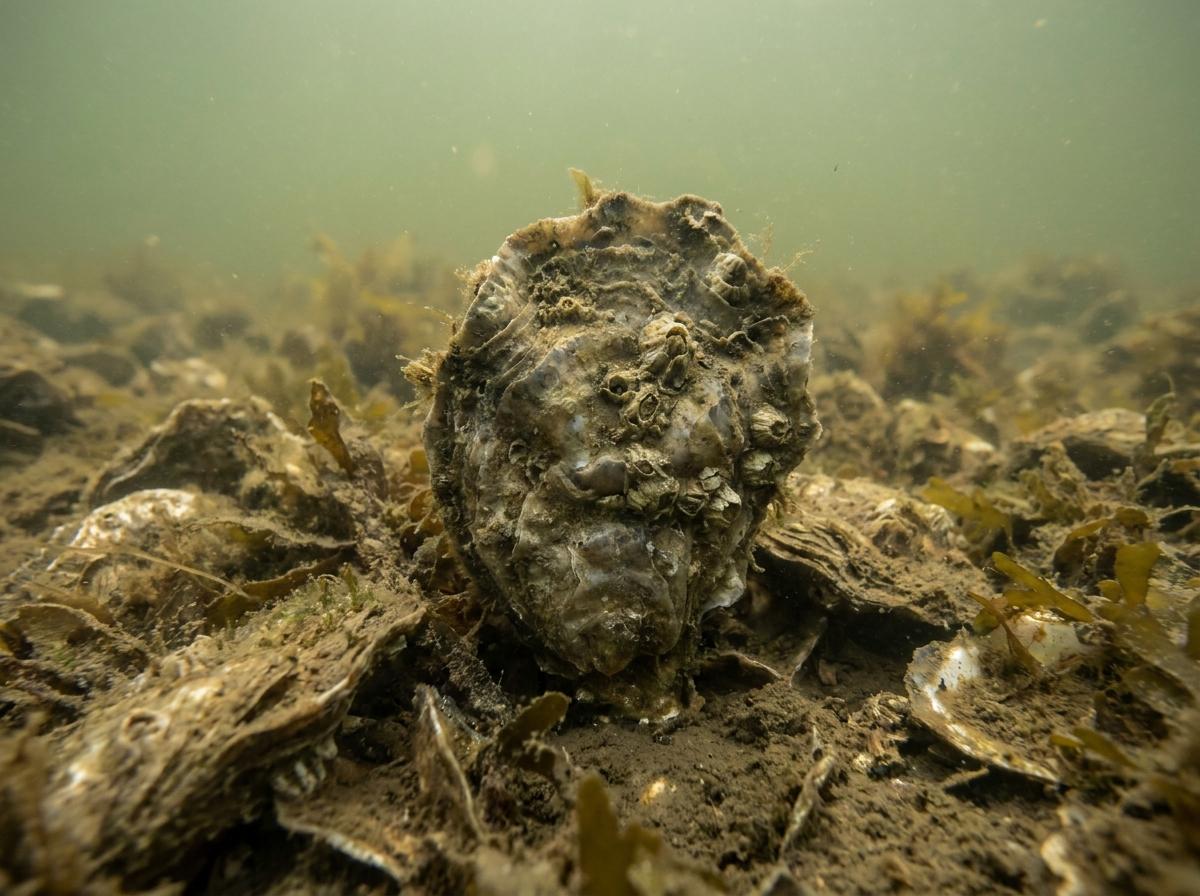
The eastern oyster (Crassostrea virginica), also called the American oyster or Atlantic oyster, is a reef-forming bivalve native to the Atlantic and Gulf coasts of North America. Its rough, irregular shell grows attached to hard bottom, old shells, pilings, or other oysters in brackish estuaries. As it filters plankton and suspended particles, an oyster reef creates habitat for small fish, crabs, shrimp, and many other estuarine animals. Spawning is triggered by warm water, and free-swimming larvae settle when they find suitable shell or other firm substrate.
Humans manage eastern oysters as seafood, aquaculture stock, and habitat engineers. Farms may grow hatchery seed in cages, bags, racks, or bottom leases, depending on tides, salinity, predators, and local regulations. Hatcheries and breeding programs select lines for growth and resistance to diseases such as Dermo and MSX, while restoration projects place clean shell or reef structures where larvae can attach. Good stewardship includes harvest closures, water-quality monitoring, biosecurity between bays, and careful handling because oysters are eaten raw in many markets.
Colors: White to Gray