



Common Carp
Cyprinus carpio
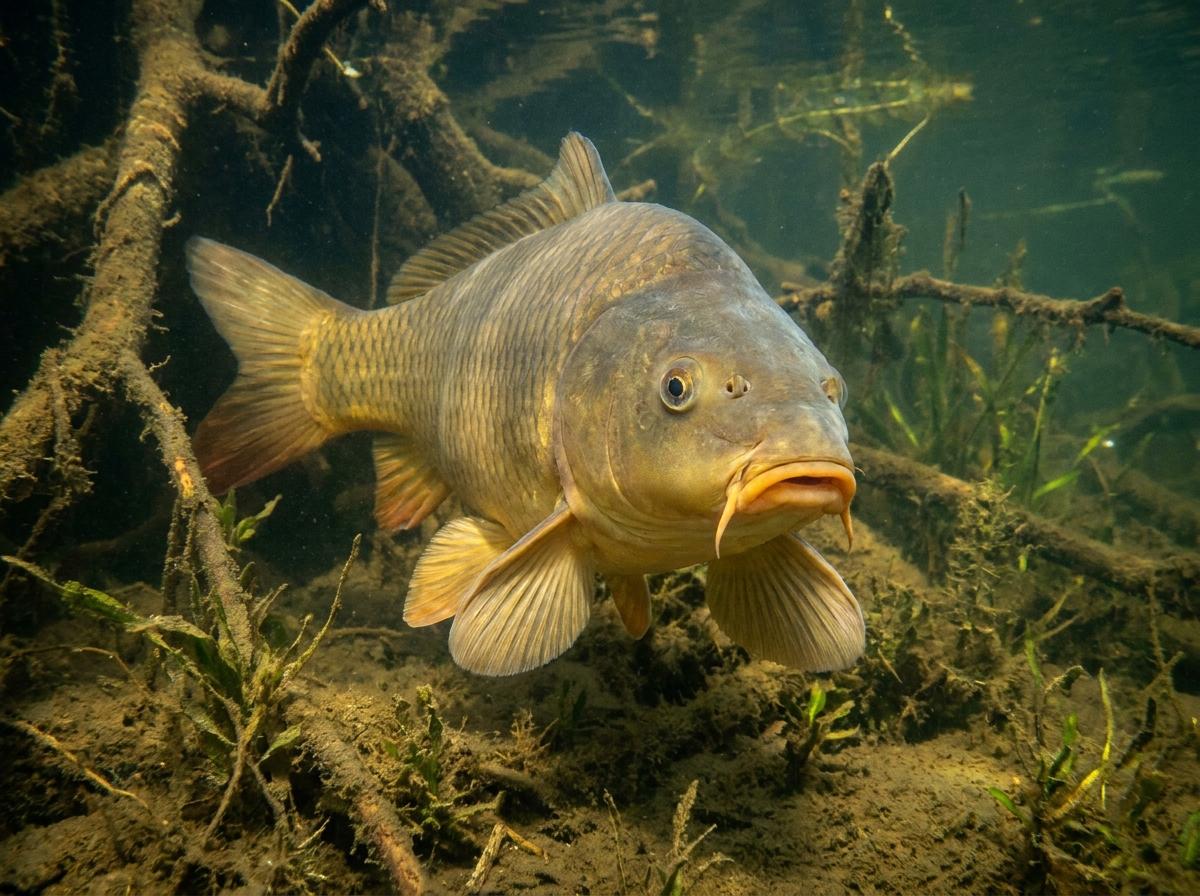
The common carp (Cyprinus carpio) is a deep-bodied Eurasian freshwater fish that has been moved, farmed, and domesticated for centuries. Wild-type fish are bronze to olive with two pairs of barbels beside the mouth, large scales, and a habit of rooting through bottom sediments for insects, plants, mollusks, and detritus. Selective breeding produced food strains, mirror carp with scattered large scales, leather carp with few scales, and ornamental koi, all tied to the same species. Its hardiness helps explain both its value in ponds and its problems where it becomes invasive.
People keep common carp as food fish, pond fish, research animals, and sport targets, but management depends heavily on location. In aquaculture they tolerate a range of water conditions, yet growth and health still rely on adequate oxygen, stocking control, and balanced feed. In garden ponds, carp and koi need strong filtration and enough depth to avoid overheating or winterkill. In natural lakes and rivers outside their native or managed range, dense carp populations can muddy water, uproot vegetation, and reduce habitat quality for native fish and waterfowl, so release is often illegal or tightly controlled.