


Clown Loach
Chromobotia macracanthus
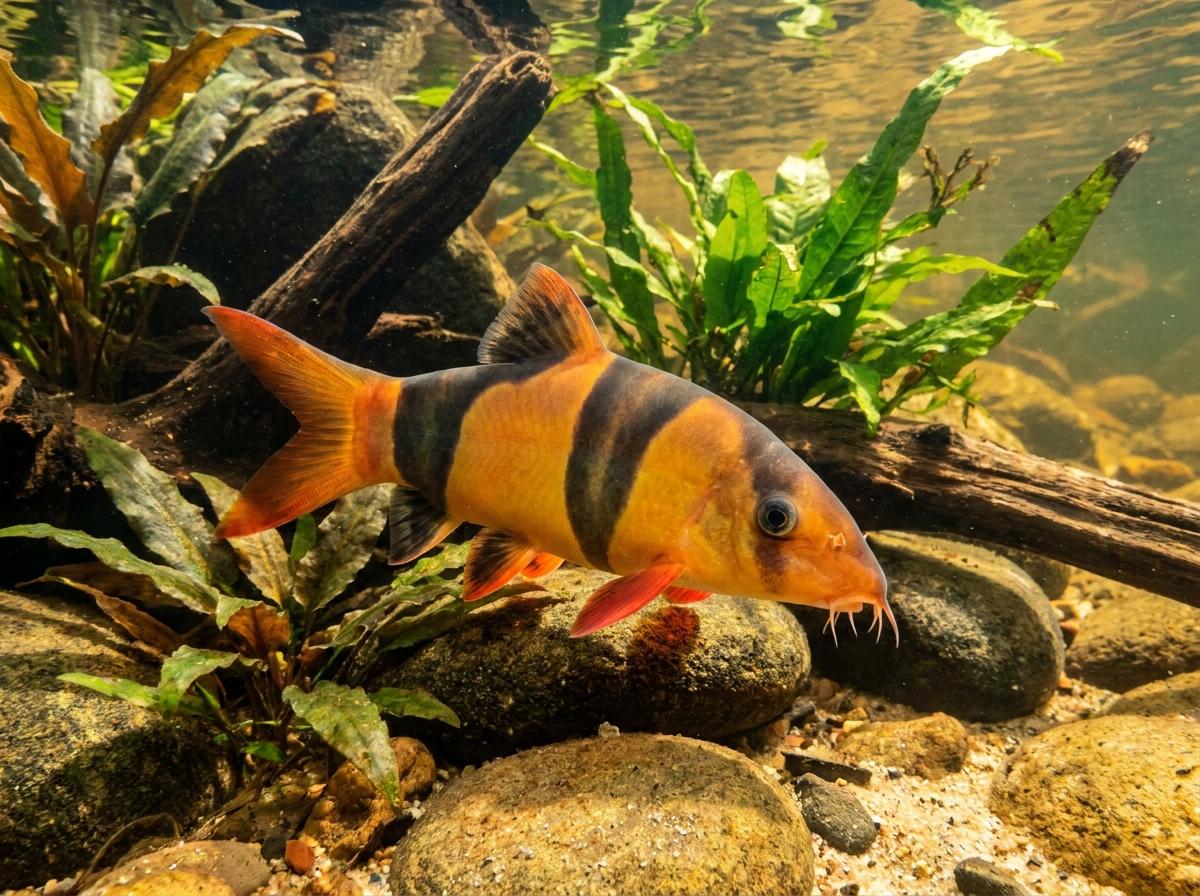
Native to the peat-stained rivers and floodplain systems of Sumatra and Borneo, the clown loach (Chromobotia macracanthus) is a large, social botid loach. Juveniles sold in aquarium shops are often only a few centimeters long; in large, stable systems adults can approach 25 to 30 cm, and some live for decades. The deep orange body, three bold black bands, and red-orange fins make them easy to recognize. They forage along the bottom with sensitive barbels, make audible clicking sounds, and carry sharp movable spines beneath the eyes, a detail that matters during netting and transport.
In aquariums, clown loaches need more space and company than their small retail size suggests. A long, mature tank suits a group better than a single fish, with shaded retreats under wood or rock and a soft bottom that protects their barbels. Warm, stable, well-filtered water is more important than bright display lighting. They eat sinking prepared foods, worms, crustaceans, plant matter, and occasional snails, but they are not a simple snail-control solution. Quarantine is useful because stress and skin sensitivity can make them prone to disease.
Colors: Wild Type