




Chinese Alligator
Alligator sinensis
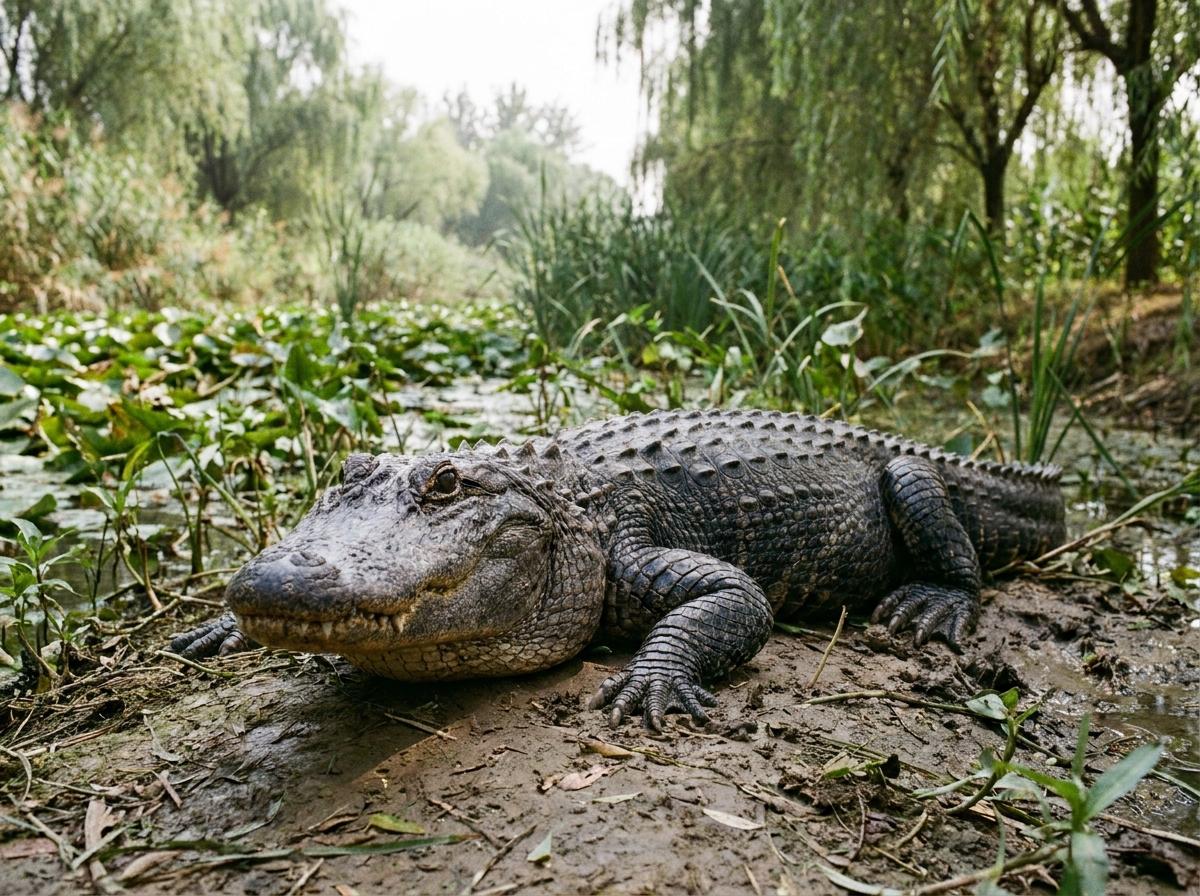
The Chinese alligator, Alligator sinensis, is a small, heavily armored crocodilian from the lower Yangtze River region of eastern China. Adults are far shorter than American alligators, with a broad snout, bony eyelids, and dark olive to gray coloration. In the wild it uses slow rivers, ponds, marshes, and agricultural waterways, often digging burrows for shelter and winter dormancy. Its natural diet includes fish, snails, crustaceans, amphibians, and other small animals taken near the water's edge.
This species is one of the world's most endangered crocodilians, so human care is mainly a conservation issue rather than an ownership topic. Chinese alligators are managed in breeding centers and zoos with secure pools, basking areas, temperature control, and careful records to preserve genetic diversity. Reintroduction work depends on protected wetlands, local cooperation, and long-term monitoring after release. Private keeping is generally restricted, and any legitimate transfer requires specialized permits and facilities. For conservation teams, the challenge is not only breeding alligators successfully but restoring enough connected habitat for them to behave like wild animals again.
Colors: Wild Type