



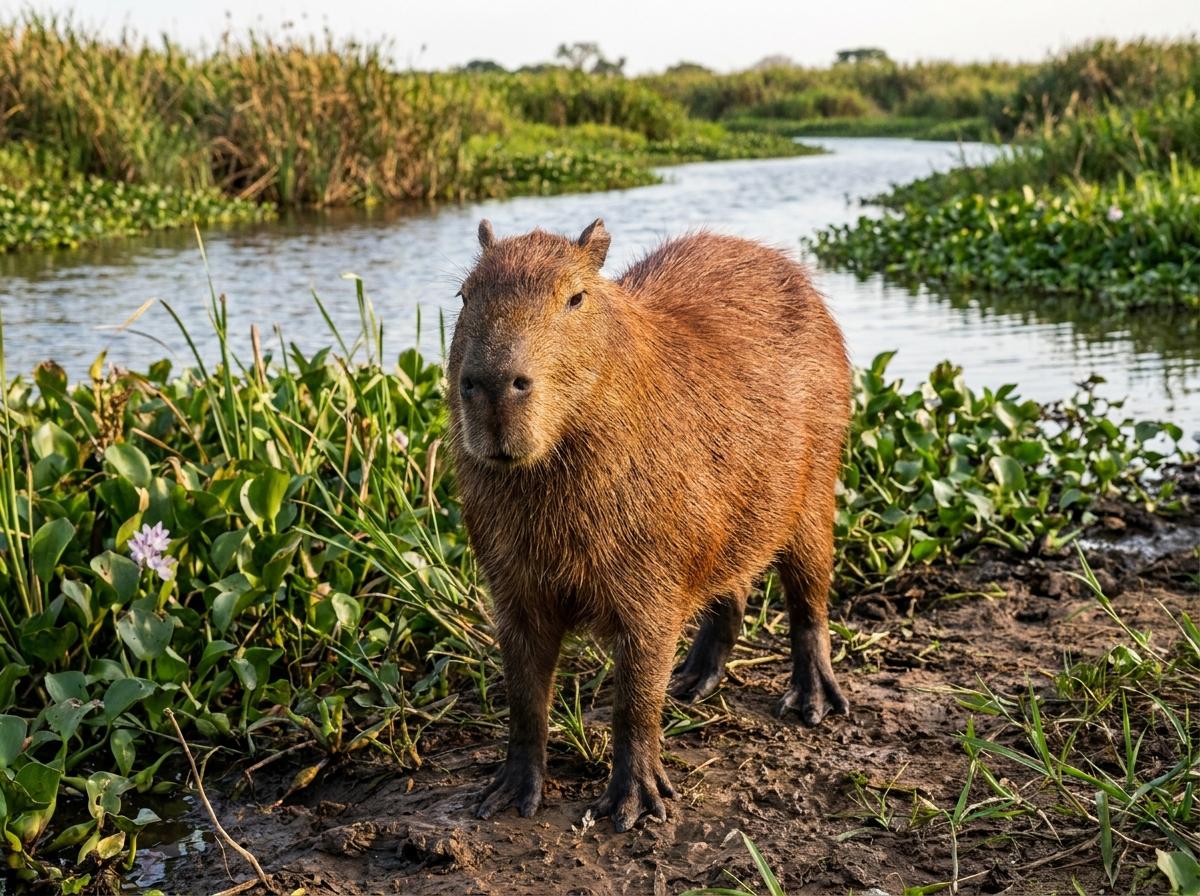
Capybara
Hydrochoerus hydrochaeris
The capybara (Hydrochoerus hydrochaeris) is the world's largest living rodent, native to wetlands, rivers, marshes, and seasonally flooded grasslands of South America. It has a barrel-shaped body, blunt head, short legs, webbed toes, and coarse brown fur. Capybaras graze grasses and aquatic plants, rest near water, and live in social groups where dominant adults, young animals, and sentries share space. Their semi-aquatic habits let them escape predators by swimming and remaining partly submerged.
Zoos, sanctuaries, farms, and some licensed private keepers manage capybaras, but they need more than a novelty pet setup. Good care includes compatible companions, secure fencing, grazing or high-fiber forage, shade, dry resting areas, and a pool or pond deep enough for normal soaking and swimming. Teeth grow continuously, so diet and chewing matter. In mixed exhibits, keepers watch social pressure and access to food. Legal ownership varies, and buyers should plan for large group-living animals that can damage landscaping and become stressed if kept alone.
Colors: Brown, Red-Brown