

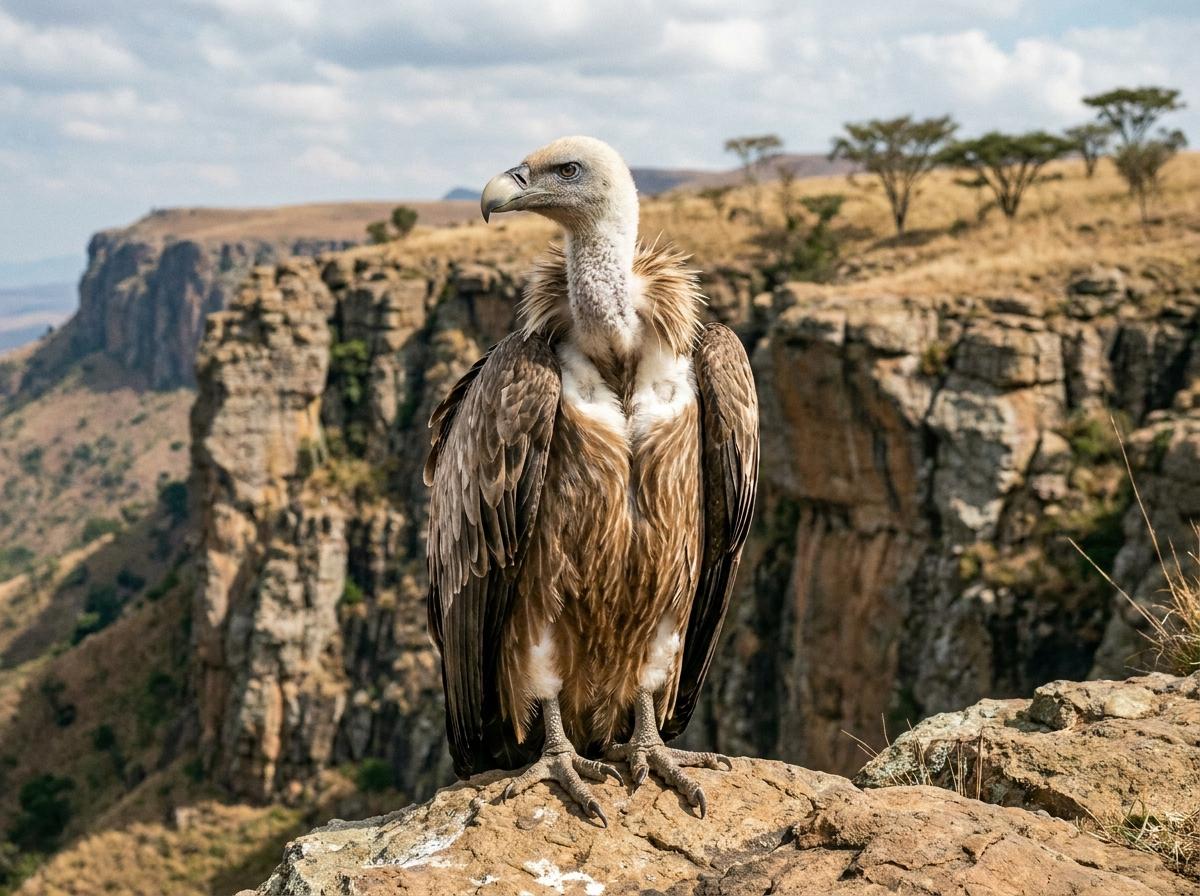
Cape Vulture
Gyps coprotheres
The Cape vulture (Gyps coprotheres), also called the Cape griffon, is a large pale vulture of southern Africa. It nests mainly on cliffs and feeds on carcasses found by soaring over open country, farmland, and savanna. Like other Gyps vultures, it has broad wings, a bare head and neck adapted for feeding, and a strong social tendency at colonies and carcasses. Its range and numbers have declined in many areas, making it an important species for African scavenger conservation.
Management includes rehabilitation, zoo care, supplementary feeding programs, power-line mitigation, and work with farmers and veterinary services. Captive Cape vultures need spacious flight areas, high perches, clean carcass-based diets, and social housing that allows normal hierarchy without crowding. Field teams track poisoning, lead exposure, electrocution, collisions, food shortages, and disturbance at nesting cliffs. Vulture restaurants or feeding sites can help when run carefully, but they must avoid contaminated carcasses and dependency problems. Public education matters because vultures remove carrion and can reduce disease risks when populations are healthy.
Colors: Black, Black and White, Brown, Cream, Gray, Orange Head, Pink Head, Red Head, Tan, White, Wild Type, Yellow Head