


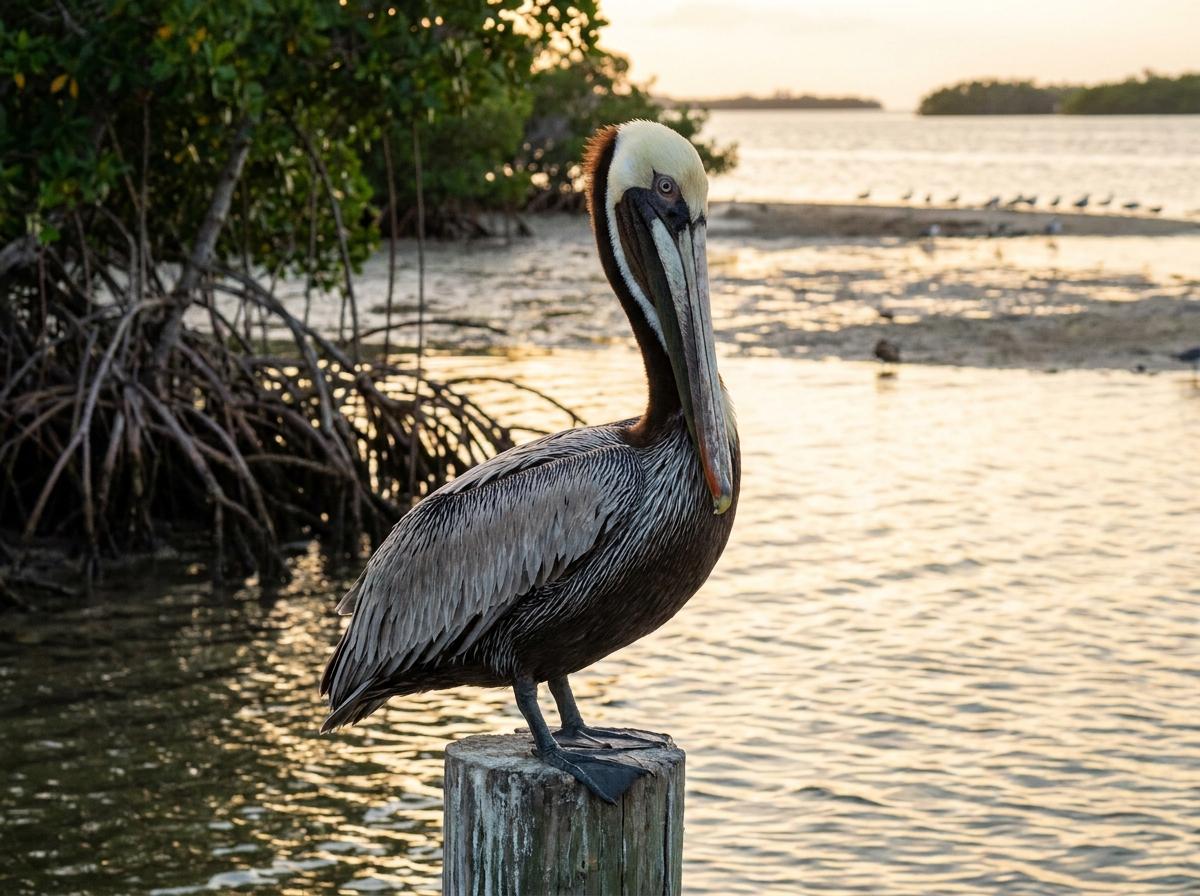
Brown Pelican
Pelecanus occidentalis
The brown pelican (Pelecanus occidentalis) is a large coastal seabird of the Americas, recognized by its long bill, expandable throat pouch, heavy body, and low gliding flight over waves. Unlike many pelicans that scoop fish while swimming, brown pelicans commonly plunge-dive from the air, folding their wings as they hit the water. Adults nest in colonies on islands, mangroves, or protected coastal sites, and plumage changes with age and breeding season. The species is also a well-known recovery story after pesticide-related eggshell thinning.
People manage brown pelicans through wildlife rehabilitation, colony protection, fisheries awareness, and zoo or aquarium care. Injured birds often arrive with fishing line, hooks, wing trauma, oiling, or starvation, so treatment requires experienced handling and safe fish diets. Captive habitats need pools, dry resting areas, clean footing, and enough space to prevent bill and wing damage. Field stewardship includes reducing disturbance at nesting colonies, disposing of fishing tackle properly, and monitoring storms, harmful algal blooms, and prey changes that can affect breeding success.
Colors: Wild Type