


Blue Whale
Balaenoptera musculus
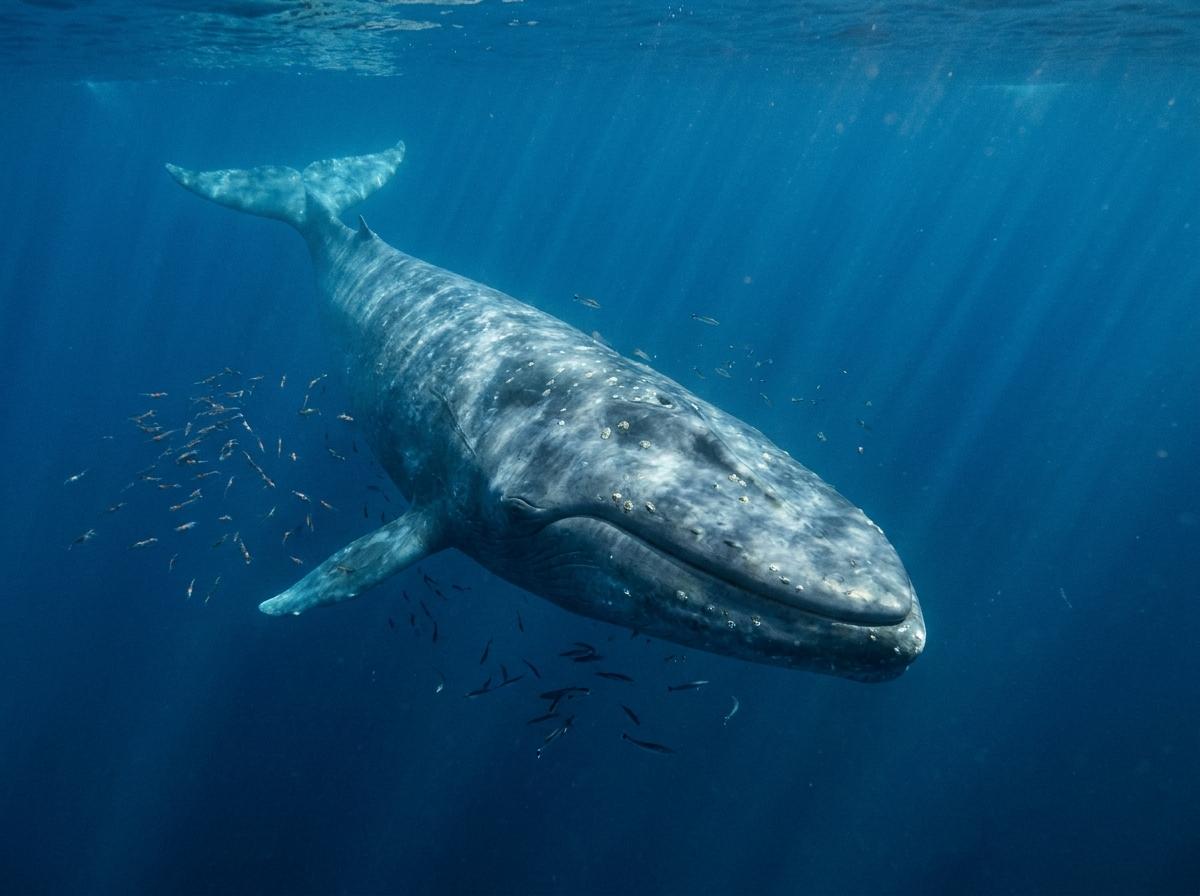
The blue whale (Balaenoptera musculus) is the largest animal known to have lived, a long streamlined baleen whale found in oceans around the world. Its mottled blue-gray body, tiny dorsal fin, broad flukes, and expandable throat grooves are built for engulfing huge volumes of water and filtering out krill. Different populations migrate between productive feeding grounds and lower-latitude breeding or calving areas, though routes and timing vary. Even after the end of most commercial whaling, many populations remain shaped by the severe losses of the twentieth century.
Blue whales are not animals for captivity; human work centers on field research, protected areas, vessel management, and acoustic monitoring. Scientists identify individuals from mottling patterns, collect biopsy samples, track calls, and map feeding habitat. Conservation planning addresses ship strikes, fishing-gear entanglement, underwater noise, changing krill distribution, and the effects of warming seas. Whale-watching operators and boaters have a practical role as well: distance rules, slower speeds near whales, and accurate sighting reports can reduce disturbance while improving population knowledge.
Colors: Wild Type