

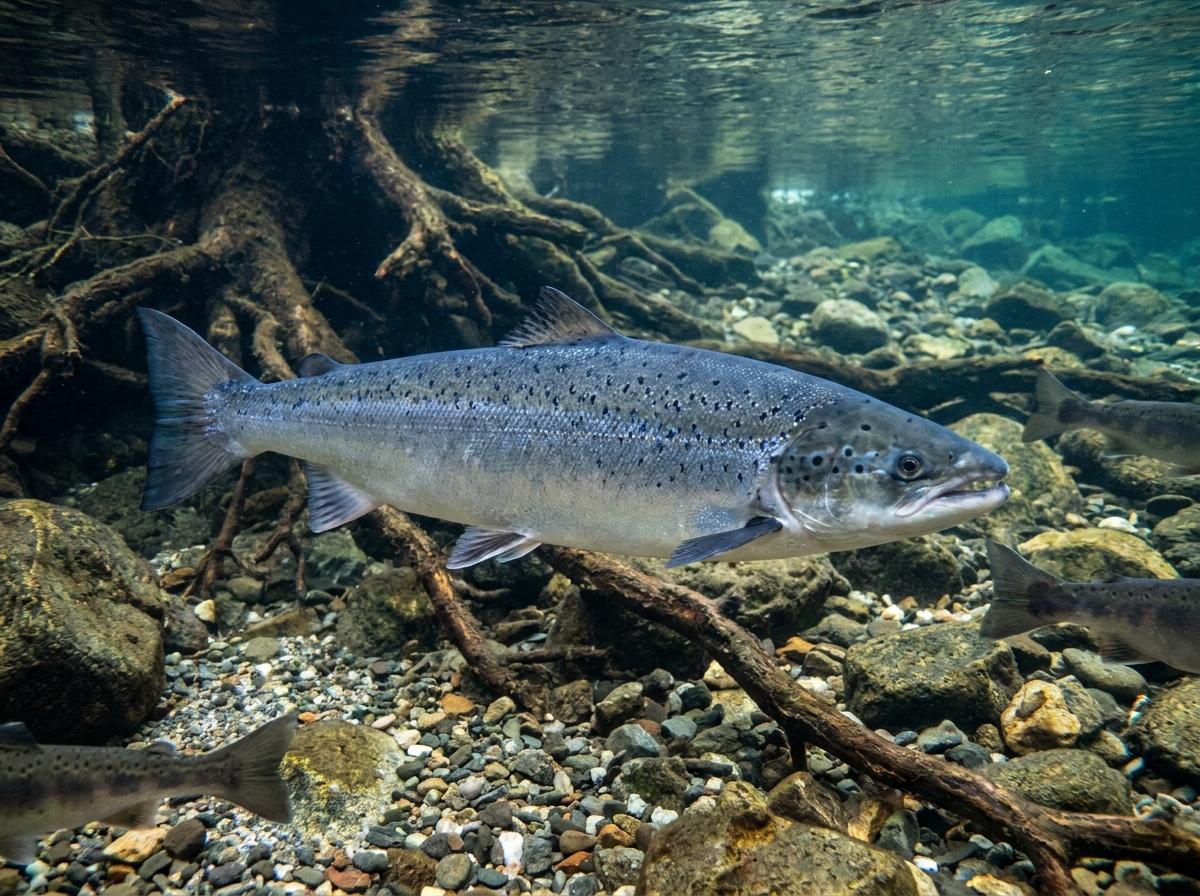
Atlantic Salmon
Salmo salar
Atlantic salmon (Salmo salar) is an anadromous salmonid native to rivers draining into the North Atlantic. Most hatch in freshwater, migrate to sea as smolts, grow in rich marine feeding grounds, and return to rivers to spawn. At sea they are bright silver; spawning adults darken and may develop red or bronze tones. Unlike many Pacific salmon, some Atlantic salmon survive spawning and can return in later years. Landlocked populations also occur in certain lakes.
People encounter Atlantic salmon through angling, hatcheries, conservation programs, and a large global aquaculture industry. Farmed salmon are commonly raised in sea cages or recirculating systems, where water quality, stocking density, feed sourcing, parasites, and escape prevention are major management issues. Wild populations depend on clean gravel, cool water, fish passage around dams, and protection from overharvest. Hatchery stocking can support some fisheries, but it must be planned carefully to avoid weakening local genetics. For consumers and buyers, origin and production method are more informative than the name alone.