

American Lobster
Homarus americanus
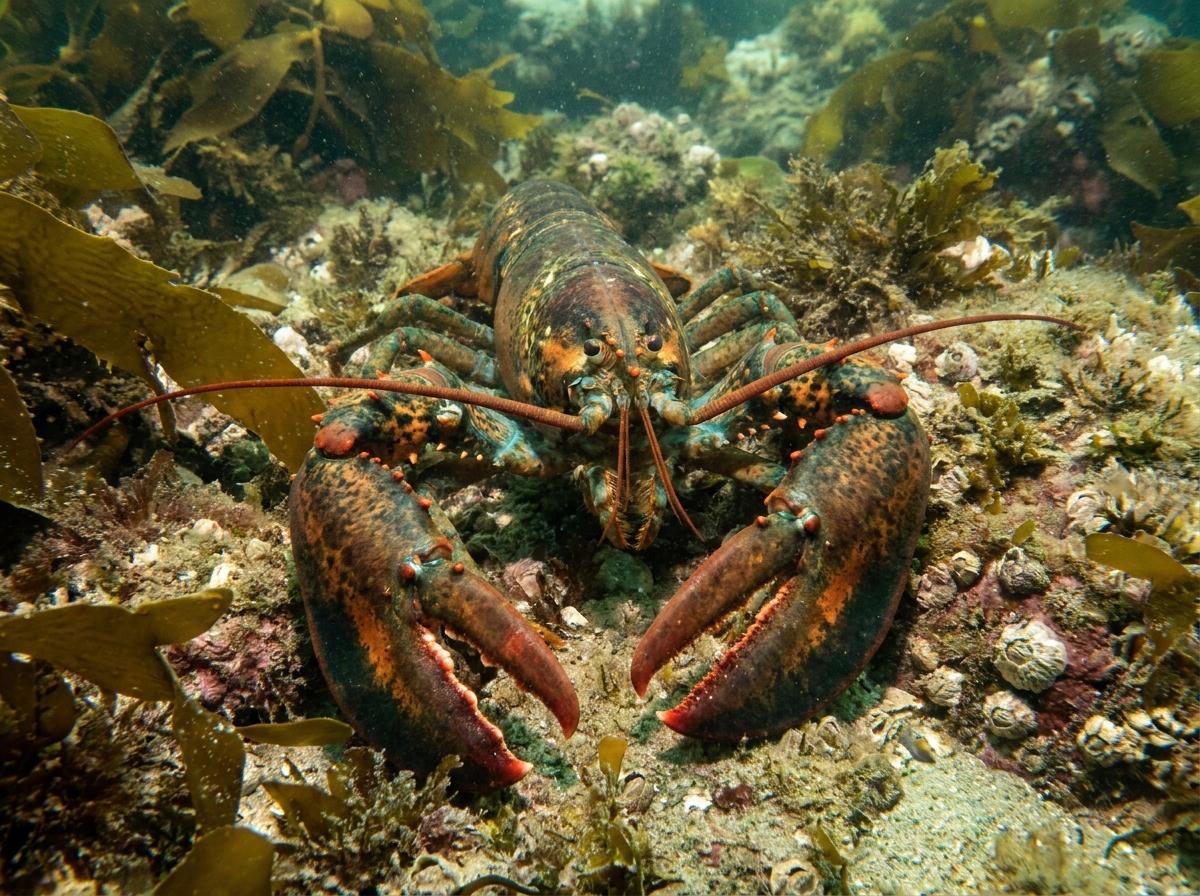
The American lobster (Homarus americanus) is the large clawed lobster of the northwest Atlantic, ranging from Canada to the northeastern United States. In life it is usually mottled greenish brown or blue-black rather than the red color seen after cooking. One front claw is commonly broader for crushing while the other is slimmer for cutting, and the animal grows by molting its hard shell. Lobsters shelter in rocky crevices, burrows, and structured bottom habitat, emerging to feed on fish, mollusks, worms, crustaceans, and carrion.
People manage American lobsters through a major trap fishery, live holding systems, research hatcheries, and public aquaria. Fisheries use measures such as minimum and maximum sizes, escape vents, protection of egg-bearing females, and V-notching in some regions. Live storage depends on cold, well-oxygenated seawater with stable salinity and careful separation, because lobsters may injure or eat one another after molts. Warming water, shell disease, and changing coastal ecosystems are important issues for managers and buyers who depend on consistent supply.
Colors: Blue (Rare Genetic Variant), Greenish-Brown