


American Kestrel
Falco sparverius
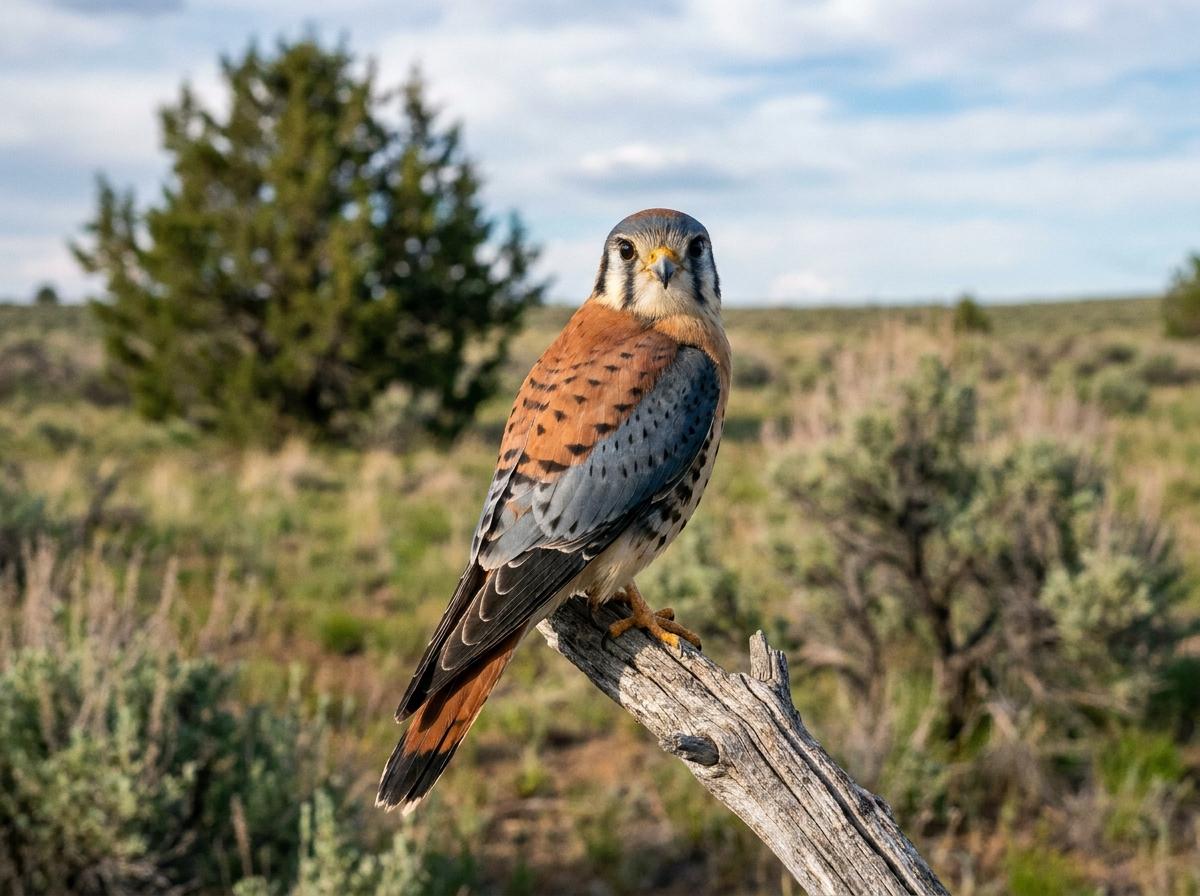
The American kestrel (Falco sparverius) is the smallest falcon in North America and a familiar hunter of open country, farms, deserts, grasslands, and city edges. It has pointed wings, a long tail, bold facial stripes, and clear sex differences: males show blue-gray wings and rufous backs, while females are mostly rufous above with barring. Kestrels hover into the wind or perch on wires and posts, dropping on insects, small mammals, lizards, and small birds. They nest in cavities rather than building stick nests.
Human involvement ranges from falconry and education birds to nest-box monitoring and rehabilitation. Keeping a kestrel legally requires the relevant permits, appropriate mews or flight housing, and a diet based on whole prey rather than loose meat. Nest boxes can help where natural cavities are scarce, but they must be placed and monitored to reduce predation and competition. Biologists track local declines linked to habitat change, pesticides, window strikes, and loss of prey-rich grassland, making citizen nest records useful when collected carefully.
Colors: Wild Type