

American Flamingo
Phoenicopterus ruber
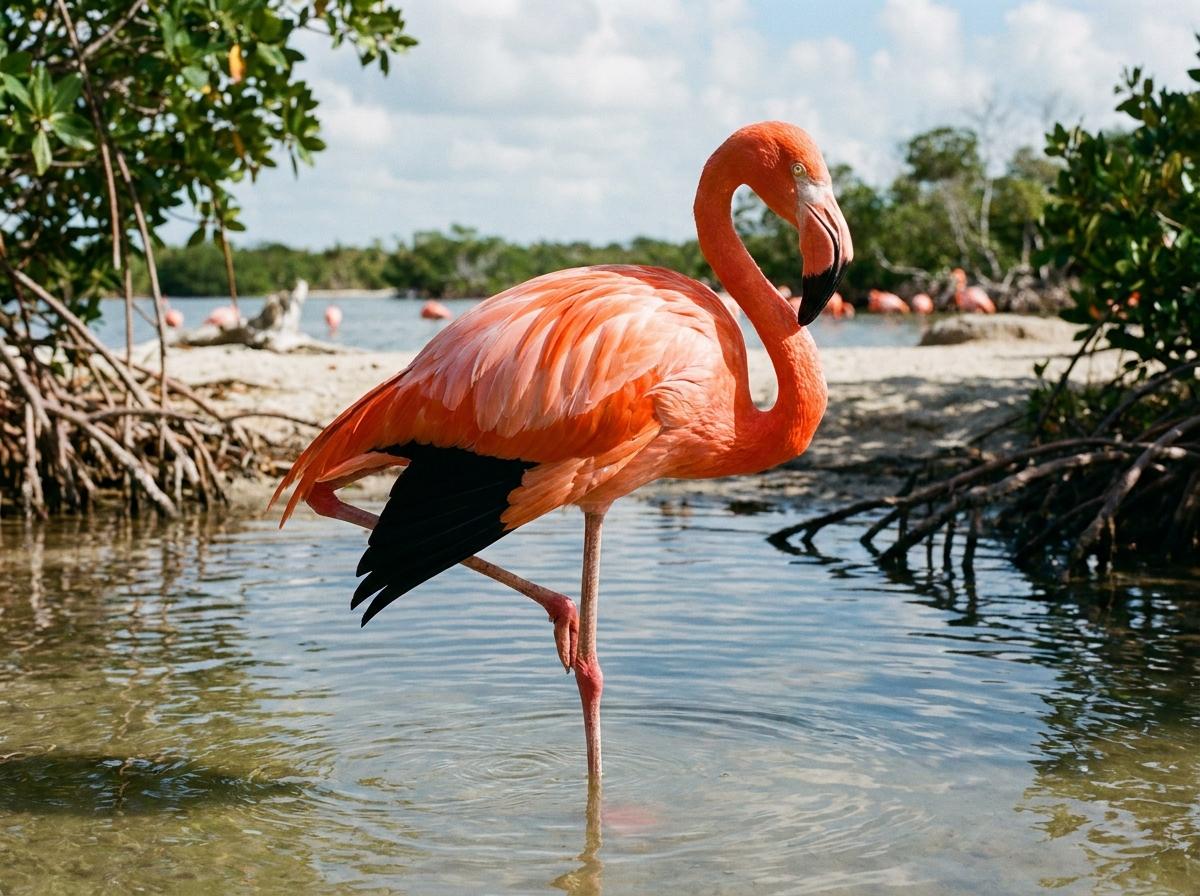
The American flamingo (Phoenicopterus ruber), also called the Caribbean flamingo, is a large pink wading bird of the Caribbean, the Bahamas, the Galapagos, and parts of northern South America and the Yucatan region. Its color comes from carotenoid pigments in algae and small invertebrates rather than from the feathers themselves. Long legs, a curved filtering bill, and a flexible neck allow it to feed in shallow saline lagoons, mudflats, and coastal lakes. Breeding birds gather in colonies and build low mud mounds for a single egg.
In zoos and managed wetlands, flamingos need flock housing; solitary birds seldom behave normally. Shallow pools, clean substrates, room to wade, and protection from predators help prevent stress and foot problems. Diets are usually formulated to maintain both nutrition and plumage color, with nesting sites shaped to encourage pair formation and chick rearing. Field conservation depends on protecting water levels, limiting disturbance at colonies, and monitoring wetlands that can be altered quickly by development, salt extraction, storms, or drought.
Colors: Wild Type