



American Alligator
Alligator mississippiensis
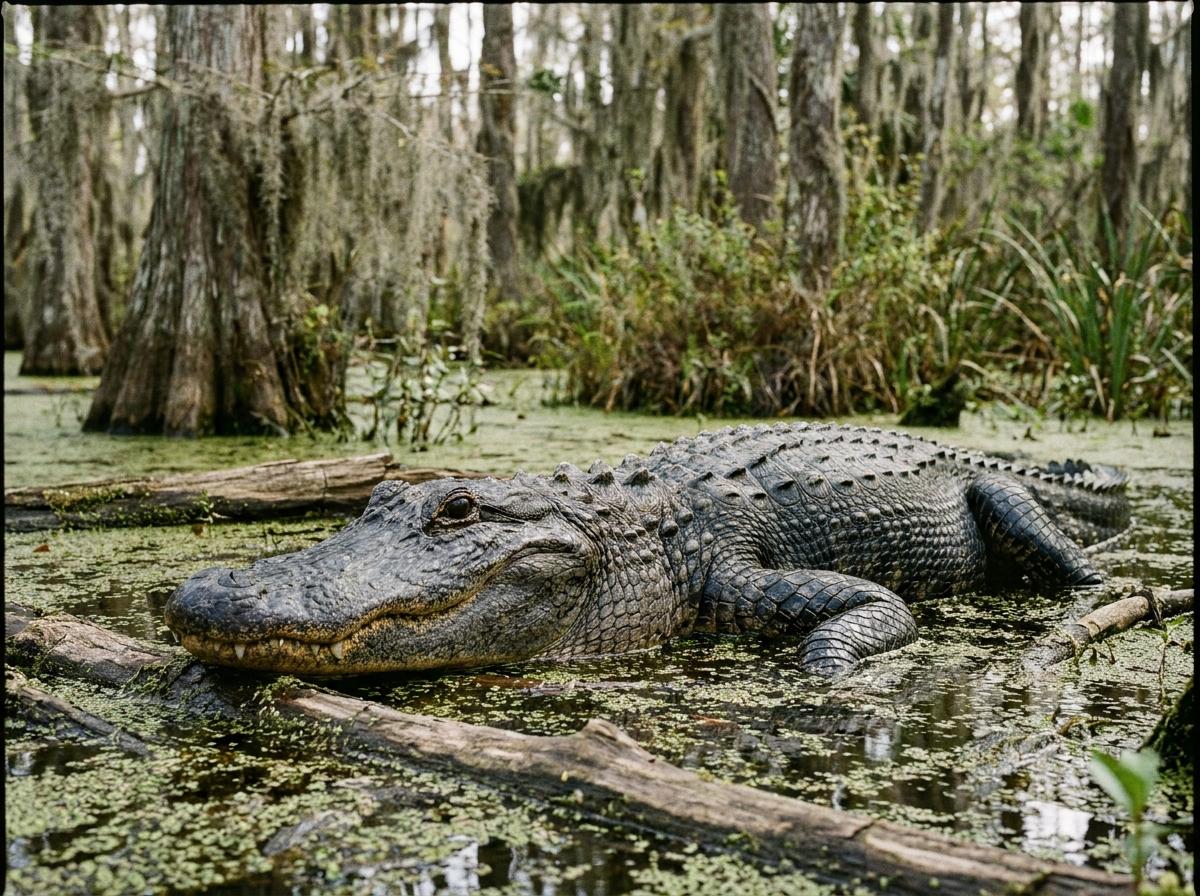
The American alligator (Alligator mississippiensis) is the large crocodilian native to the wetlands, rivers, lakes, and coastal marshes of the southeastern United States. It has a broad rounded snout, heavy armored body, powerful tail, and teeth that usually sit inside the upper jaw when the mouth is closed. Once heavily depleted by hunting, the species recovered under legal protection and now occupies many areas where people also fish, boat, farm, and build near water.
Alligators are managed through a mix of wildlife regulation, public education, ranching, and nuisance-response programs. They are farmed in some states for hides and meat, and wild egg collection may be tied to wetland conservation agreements. Private keeping is tightly regulated or prohibited in many places; adults require secure warm water, haul-out space, strong barriers, and experienced handling. Zoos plan for growth, aggression, winter temperature changes, and nesting behavior, including the fact that incubation temperature influences hatchling sex.
Colors: White, Wild Type