


Long-Nosed Potoroo
Potorous tridactylus
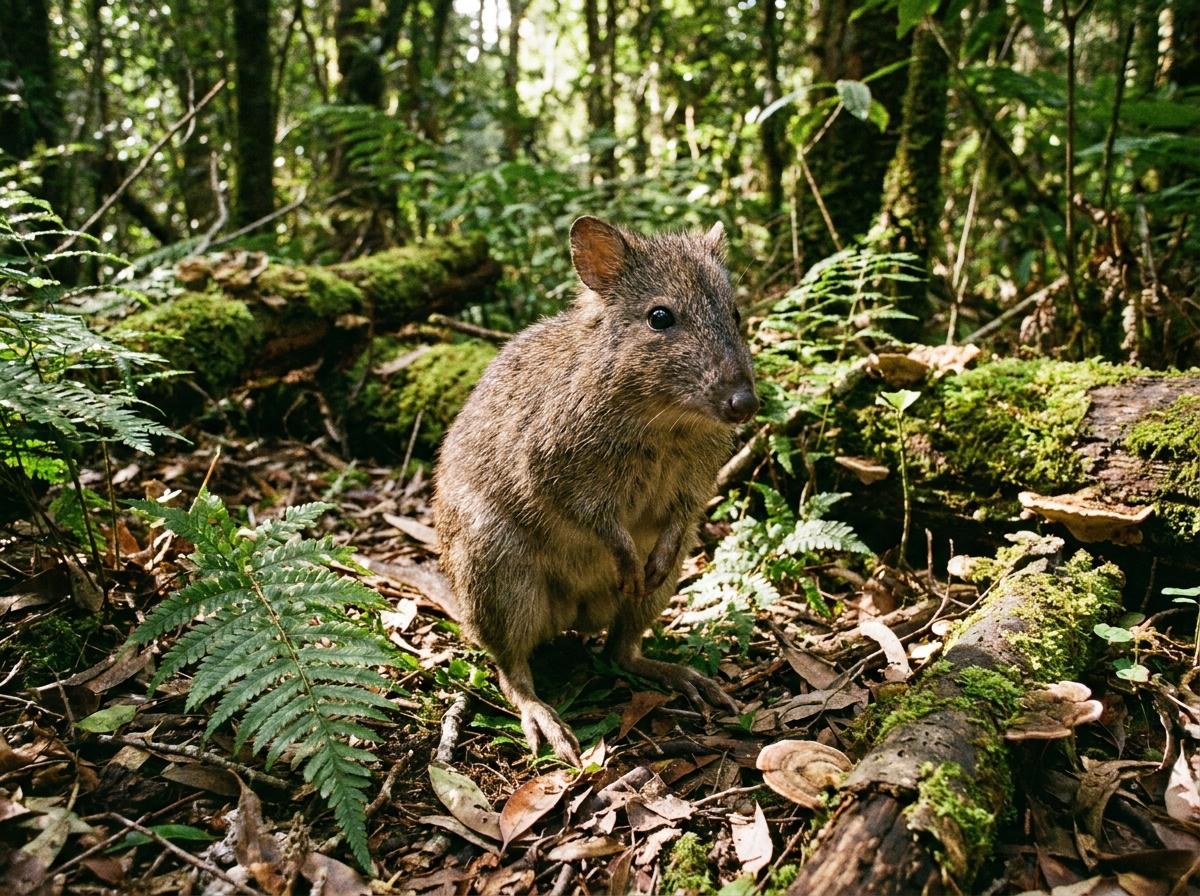
The long-nosed potoroo (Potorous tridactylus) is a small marsupial in the rat-kangaroo family, found in parts of southeastern Australia and Tasmania. It has a pointed muzzle, compact body, short forelimbs, stronger hind legs, and a grey-brown coat that blends into heath, wet forest, and dense coastal scrub. Mostly nocturnal and shy, it moves with a low hopping gait and digs with its forefeet. Much of its diet is underground fungi, including truffle-like fruiting bodies, so potoroos help spread fungal spores that support eucalypt and forest soil systems.
Long-nosed potoroos are protected native wildlife, not pets. Zoo and sanctuary care relies on quiet enclosures with dense cover, soft digging areas, nest shelters, and feeding plans that approximate a mixed fungivore diet with cultivated fungi when available, roots, vegetables, invertebrates, and specialist supplements. Handling is kept brief because these animals are stress-prone. In the wild, conservation work is closely tied to fox and feral cat control, retention of thick understorey, fire regimes that do not remove all shelter, and monitoring with cameras, hair tubes, or detection dogs. Fenced reserves and translocations may be used where local populations are too exposed.
Colors: Gray-Brown