


White-Headed Capuchin
Cebus capucinus
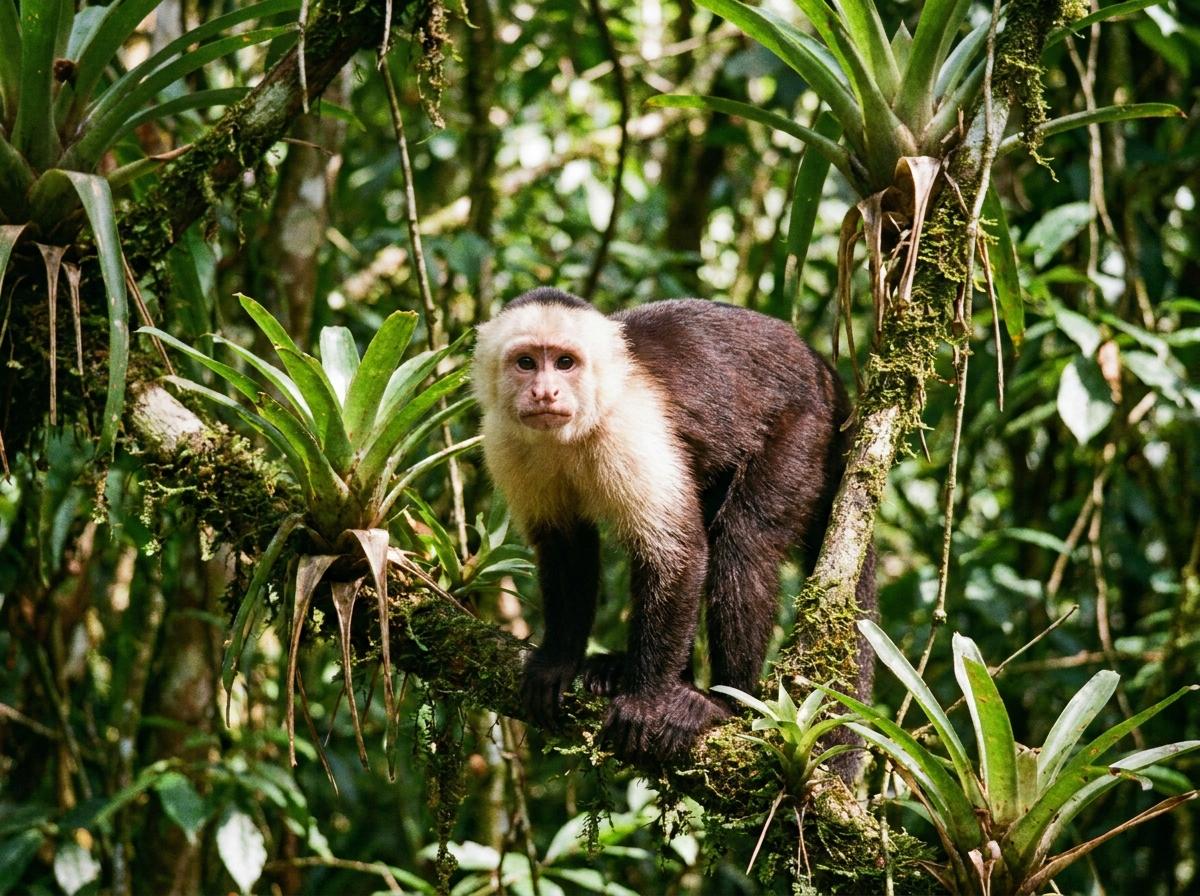
White-headed capuchins, Cebus capucinus, are New World monkeys with pale faces, throats, and shoulders set against darker bodies and tails. The name white-faced capuchin is also common, although Central American populations are often treated separately as Cebus imitator. Native Cebus capucinus populations occur in northwestern South America, especially humid and dry forests near the Pacific side of Colombia and Ecuador. Agile hands, a curling tail, and sharp problem-solving let these monkeys exploit fruit, insects, crabs, bird eggs, and other foods.
In human care, white-headed capuchins are usually managed by zoos, sanctuaries, and research colonies with primate-trained staff. They need compatible social groups, complex climbing space, puzzle feeders, and barriers that anticipate picking, prying, and tool use. Household pet keeping creates welfare and safety problems once the animal becomes adult, and legal restrictions are common. Field conservation depends on connected forest, reduced capture for trade, and careful management around farms and tourist sites where feeding can change behavior.
Colors: Black and White