


Malayan Tapir
Tapirus indicus
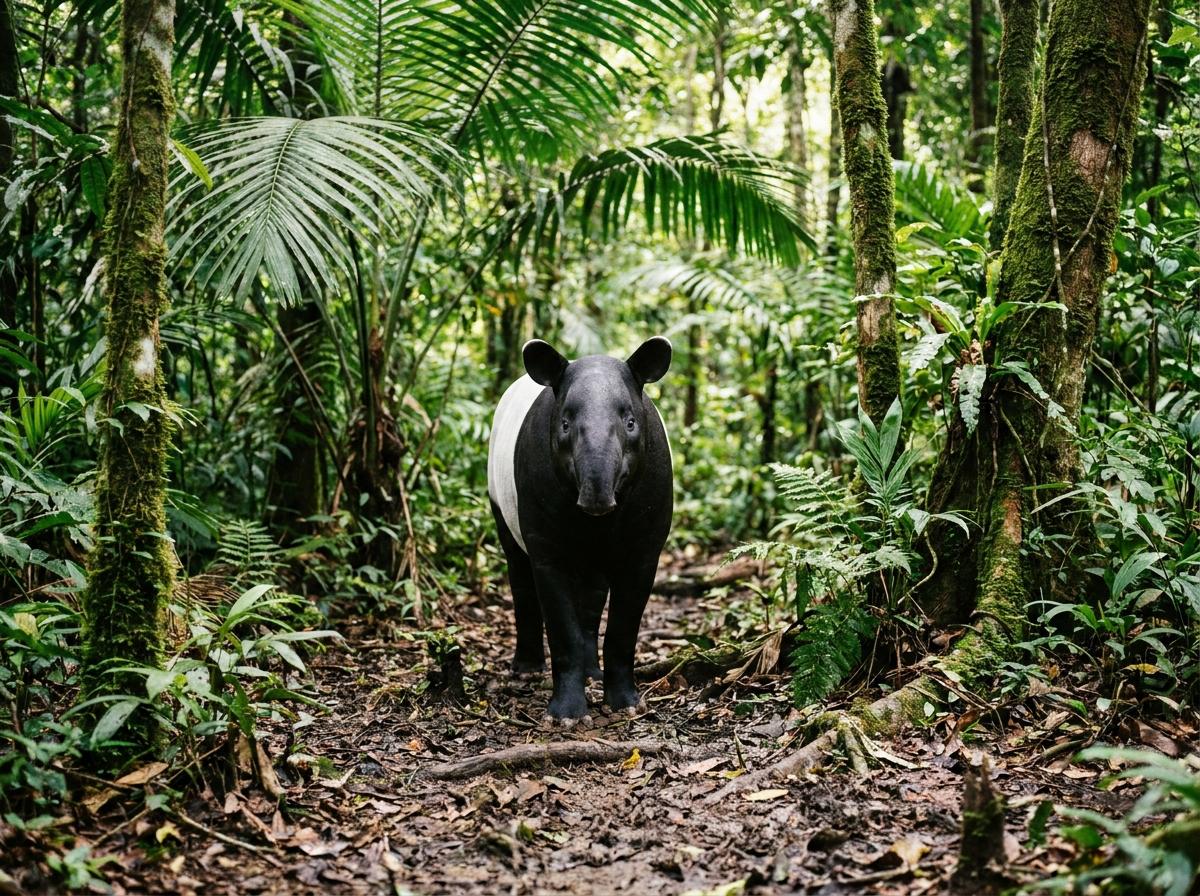
The Malayan tapir, Tapirus indicus, is the only living tapir native to Asia and the largest of the tapirs. It occurs in remaining rainforests and swamp forests of the Malay Peninsula and Sumatra, where its black front and hindquarters and pale gray-white saddle make adults easy to identify. The short trunk is a flexible upper lip and nose used to browse leaves, shoots, fruit, and aquatic plants. Young calves have the spotted and striped coat typical of tapirs, a camouflage pattern that fades as they mature.
Zoo and sanctuary care centers on space, warmth, water access, and safe footing for a heavy animal that spends much of its time browsing or resting in shade. Pools and mud wallows help with thermoregulation and skin condition, while diets combine browse, hay, pellets, and measured produce rather than large amounts of sweet fruit. Adults are usually managed carefully outside breeding introductions, since tapirs can injure one another and their keepers if startled. Conservation breeding, field surveys, road-kill mitigation, and forest protection are all relevant because the species is endangered by habitat loss, fragmentation, and hunting pressure.
Colors: Wild Type