

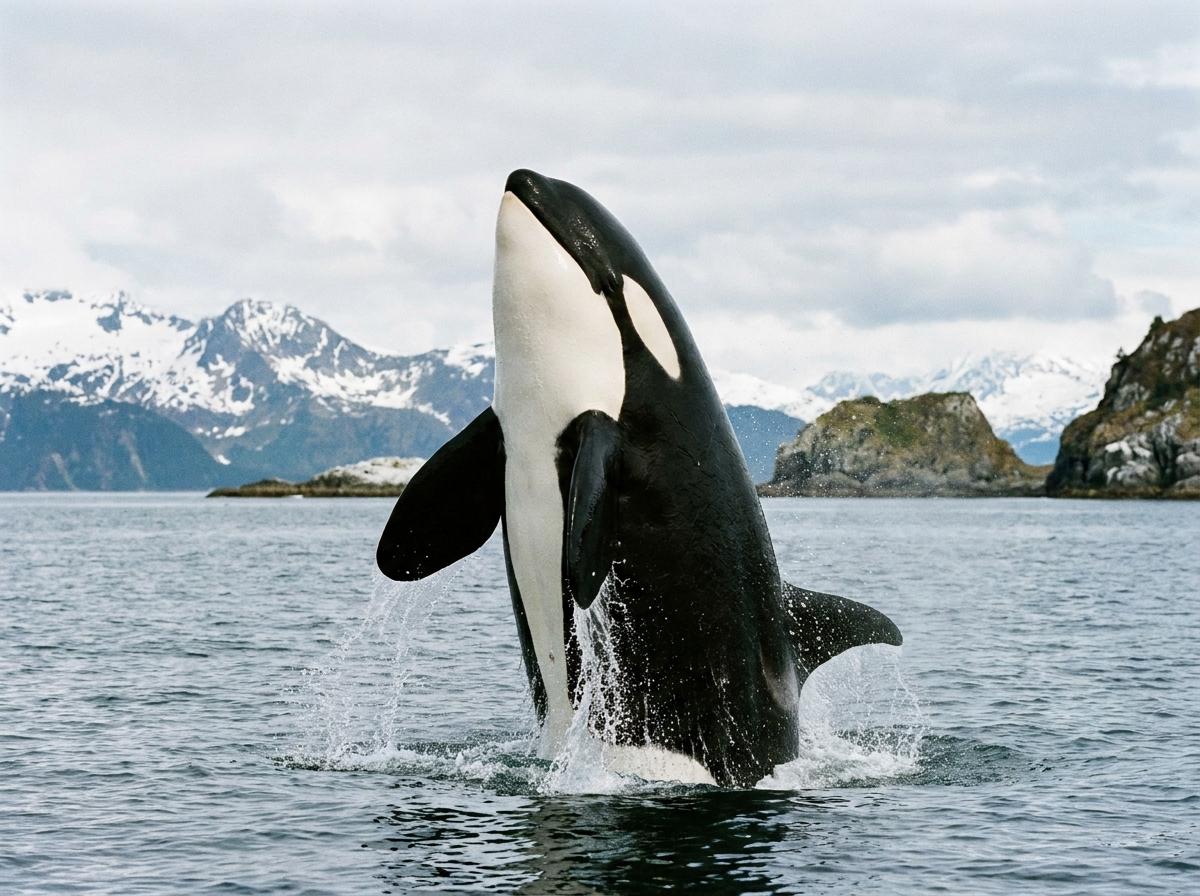
Killer Whale
Orcinus orca
The killer whale, Orcinus orca, is the largest member of the dolphin family and one of the ocean's top predators. Also called the orca, it occurs from polar seas to tropical waters, though many populations have strong regional habits and prey preferences. Its black-and-white pattern, tall dorsal fin, rounded flippers, and saddle patch behind the fin help researchers identify individuals. Killer whales live in complex social groups, often centered on maternal relatives, and different ecotypes may specialize in salmon, marine mammals, sharks, rays, or other prey.
Human work with killer whales is mainly research, conservation, stranding response, and, in a few facilities, highly specialized marine mammal care. They are not private animals, and modern management is shaped by welfare concerns, large-space needs, social stability, and public debate over captivity. Field teams use photo identification, acoustic monitoring, satellite tags, prey studies, and contaminant testing to track populations. Conservation priorities vary by region but commonly include protecting food sources, reducing vessel disturbance and underwater noise, responding to oil spills, and limiting persistent pollutants.
Colors: Wild Type