



Jaguar
Panthera onca
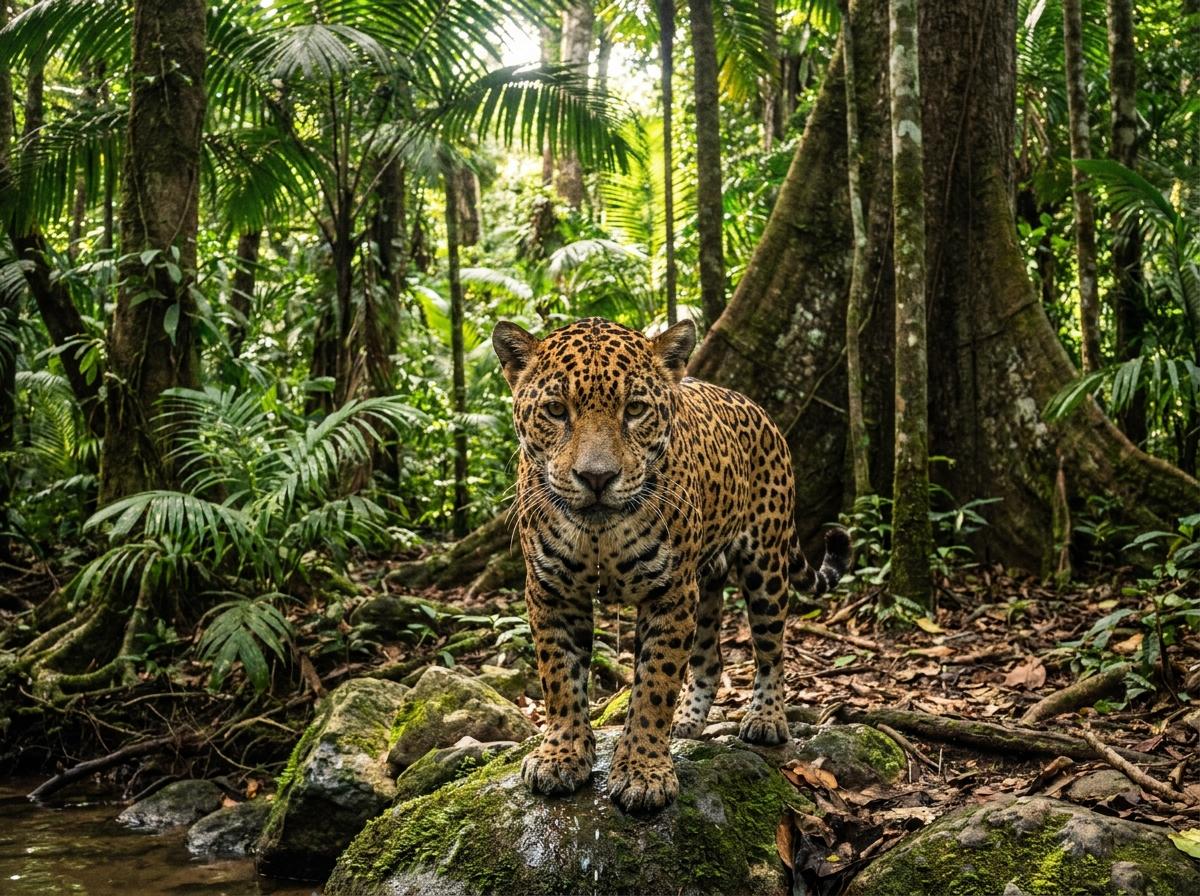
The jaguar (Panthera onca) is the largest cat native to the Americas, historically ranging from the southwestern United States through Mexico and Central America to much of South America. It is stockier than a leopard, with a broad head, short powerful limbs, and rosettes that often contain small central spots. Black jaguars are melanistic, not a separate species. Jaguars use rainforest, wetlands, dry forest, and scrub where prey is abundant, and they are unusually comfortable around water, hunting capybaras, peccaries, deer, caimans, turtles, and fish.
Human relationships with jaguars are shaped by conservation and conflict management rather than pet ownership. Ranchers may lose livestock where natural prey is depleted or forest cover is fragmented, so coexistence projects use better night corrals, carcass management, compensation, and protection of wild prey. Field biologists track individuals with camera traps because rosette patterns function like fingerprints. Zoos and sanctuaries need heavily secured exhibits with off-show dens and shaded resting sites. Water features, climbing structures, and whole-prey or balanced carnivore diets help keep managed cats active and in good condition. Range-wide survival depends on connected habitat, including forest corridors that let males disperse between breeding populations.
Colors: Black, White, Wild Type