


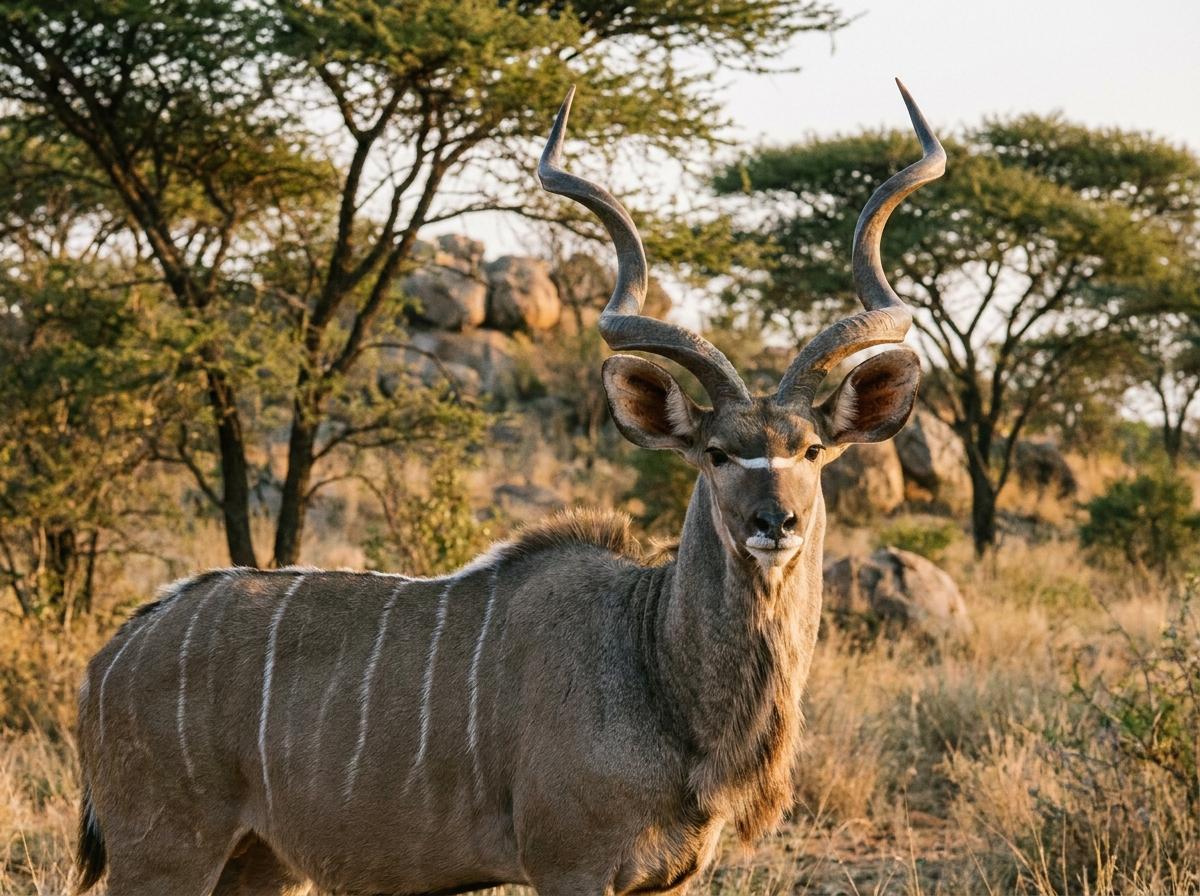
Greater Kudu
Tragelaphus strepsiceros
Among African spiral-horned antelope, the greater kudu is one of the most recognizable residents of bushland, savanna woodland, and rocky thickets. It has a gray to reddish-brown coat, narrow white body stripes, large ears, and a white facial chevron. Mature bulls are much heavier than cows and carry long corkscrew horns that may make two and a half turns; females are usually hornless. Kudus are browsers, taking leafy browse, seedpods, and fruit, and they rely on cover and a high bounding leap rather than open-country speed.
On reserves, game ranches, and zoo collections, greater kudu management starts with space, quiet handling, and strong high fencing, since startled animals can clear ordinary barriers or injure themselves. Diets should provide browse or leafy substitutes instead of a heavy grain ration, and capture work requires planning because large antelope are prone to stress and capture myopathy. Populations remain widespread, but local conservation depends on intact woodland, regulated hunting where it occurs, and keeping disease and livestock pressure from crowding them out of riparian cover.
Colors: Gray-Brown with White Stripes