

Common Molly
Poecilia sphenops
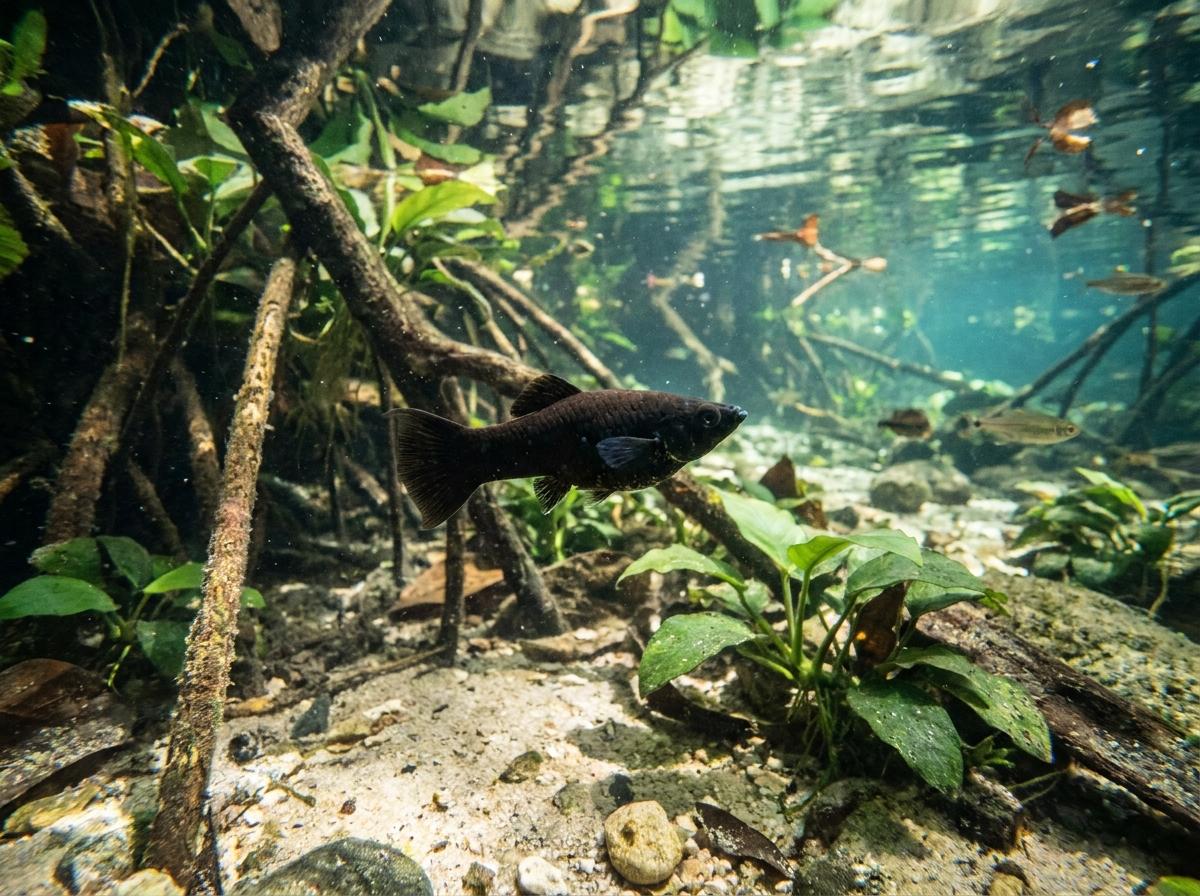
The common molly (Poecilia sphenops) is a livebearing poeciliid fish native to Mexico and Central America, especially slow streams, ditches, ponds, lagoons, and coastal waters where conditions may range from fresh to mildly brackish. Wild fish are usually modest gray, olive, or silver, but aquarium strains include black mollies, gold, marble, dalmatian, lyretail, and balloon forms. It is closely related to sailfin and Yucatan mollies, and domestic lines are sometimes mixed, so trade names do not always match a pure wild species.
In aquariums, common mollies do best in warm, hard, alkaline water with steady filtration and room to graze. They are omnivores that pick at algae and biofilm but still need vegetable matter and prepared foods; they are not a substitute for tank maintenance. Males use a gonopodium to inseminate females, which can store sperm and produce repeated broods of live fry, making population control a real issue in community tanks. Soft, acidic water, crowding, and unstable temperatures often lead to shimmying, fin problems, or poor fry survival.