




Chimpanzee
Pan troglodytes
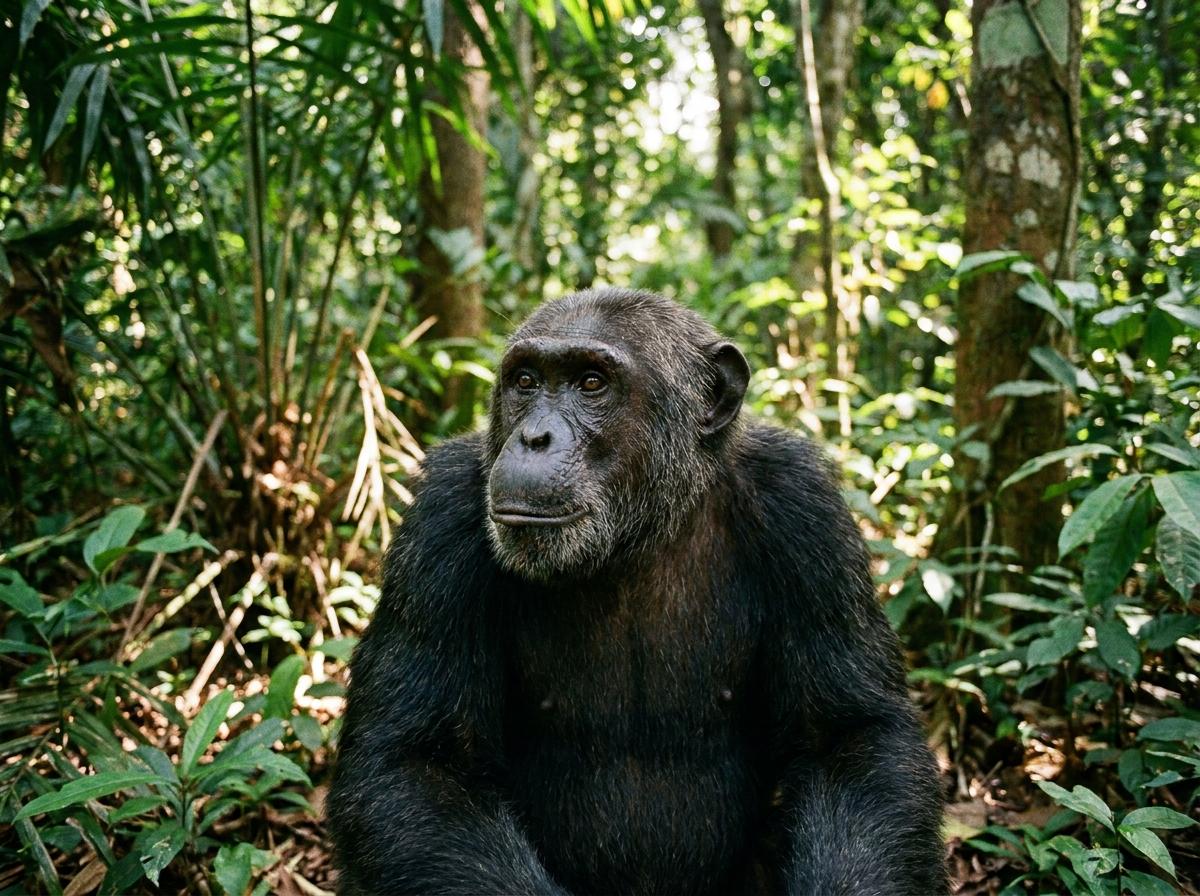
The chimpanzee, Pan troglodytes, is a great ape native to the forests and wooded savannas of equatorial Africa. Also called the common chimpanzee to distinguish it from the bonobo, it has long powerful arms, grasping hands and feet, expressive facial features, and a mostly black coat that may gray with age. Chimpanzees live in flexible communities where smaller parties split and rejoin, and they use learned behaviors such as termite fishing, nut cracking, leaf sponging, and coordinated hunting in some populations. Several regional subspecies are recognized, with differences shaped by geography rather than breed-type selection.
Chimpanzees are not suitable private pets; mature animals are strong, socially complex, long-lived, and capable of serious injury. Modern care is centered in accredited zoos, sanctuaries, and conservation programs that provide stable social groups, climbing structures, foraging challenges, veterinary care, and carefully planned introductions. Field teams monitor nesting sites, disease risks, hunting pressure, and habitat loss, while sanctuaries often care for individuals displaced by trafficking or retiring from older research settings. Ethical management treats chimpanzees as intelligent wild apes whose welfare depends on choice, space, social bonds, and protection of remaining habitats.
Colors: Wild Type