


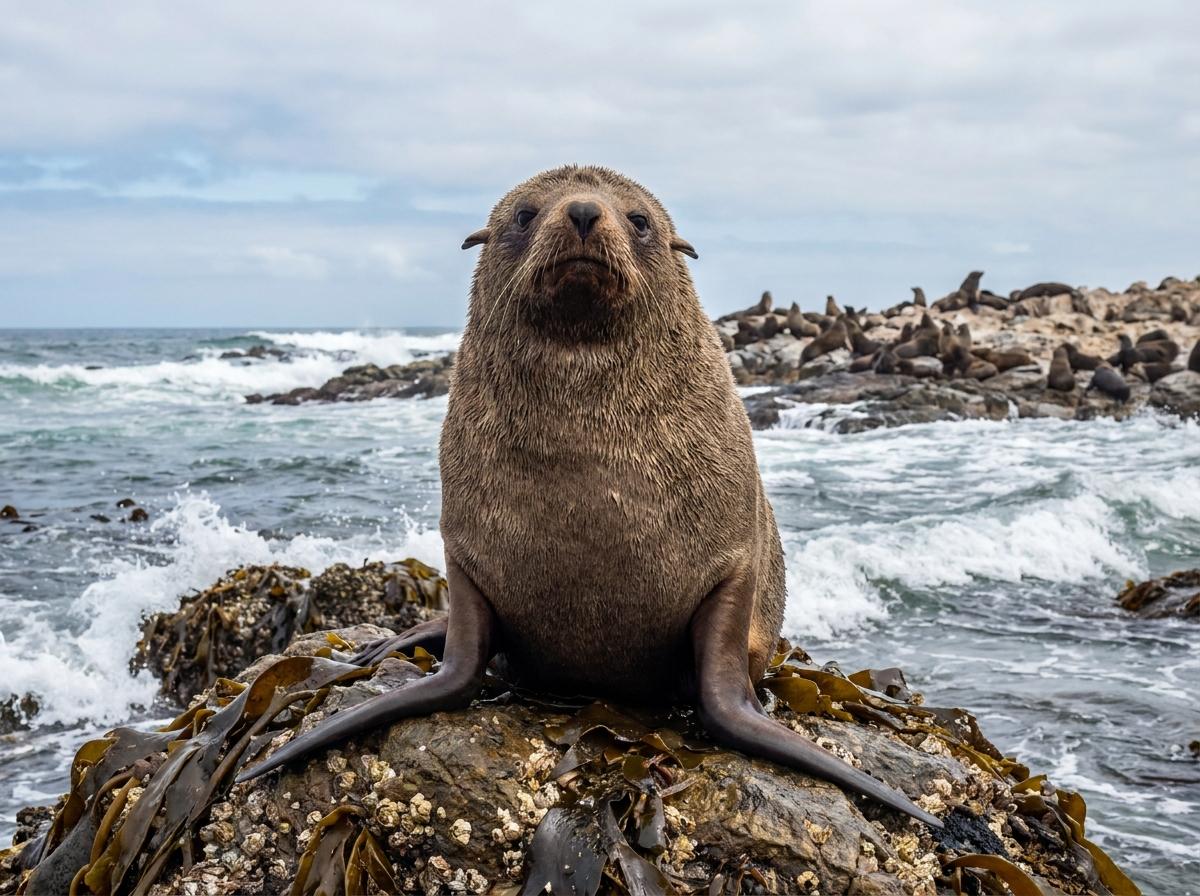
Cape Fur Seal
Arctocephalus pusillus
The Cape fur seal (Arctocephalus pusillus) is a large eared seal associated with southern African coasts, with a closely related Australian form often treated within the same species. It has dense underfur, external ear flaps, strong front flippers, and the ability to move on land by rotating the hind flippers beneath the body. Colonies gather on rocky shores, islands, beaches, and jetties, where males compete for territories and females nurse pups between feeding trips. At sea, Cape fur seals take fish, squid, and other marine prey.
Human management includes marine rehabilitation, zoo and aquarium care, fisheries interaction work, and colony monitoring. Captive seals need clean saltwater, dry haul-out space, social grouping, careful fish handling, and training for voluntary health checks. Rescue centers treat entanglement, wounds, malnutrition, oiling, and disease, while also limiting stress from unnecessary handling. In the wild, practical concerns include plastic debris, conflict with fisheries, changing prey availability, and public behavior around crowded colonies. These seals are agile and strong, so professional barriers and handling plans are essential.
Colors: Dark Brown, Light Brown