



Bush Dog
Speothos venaticus
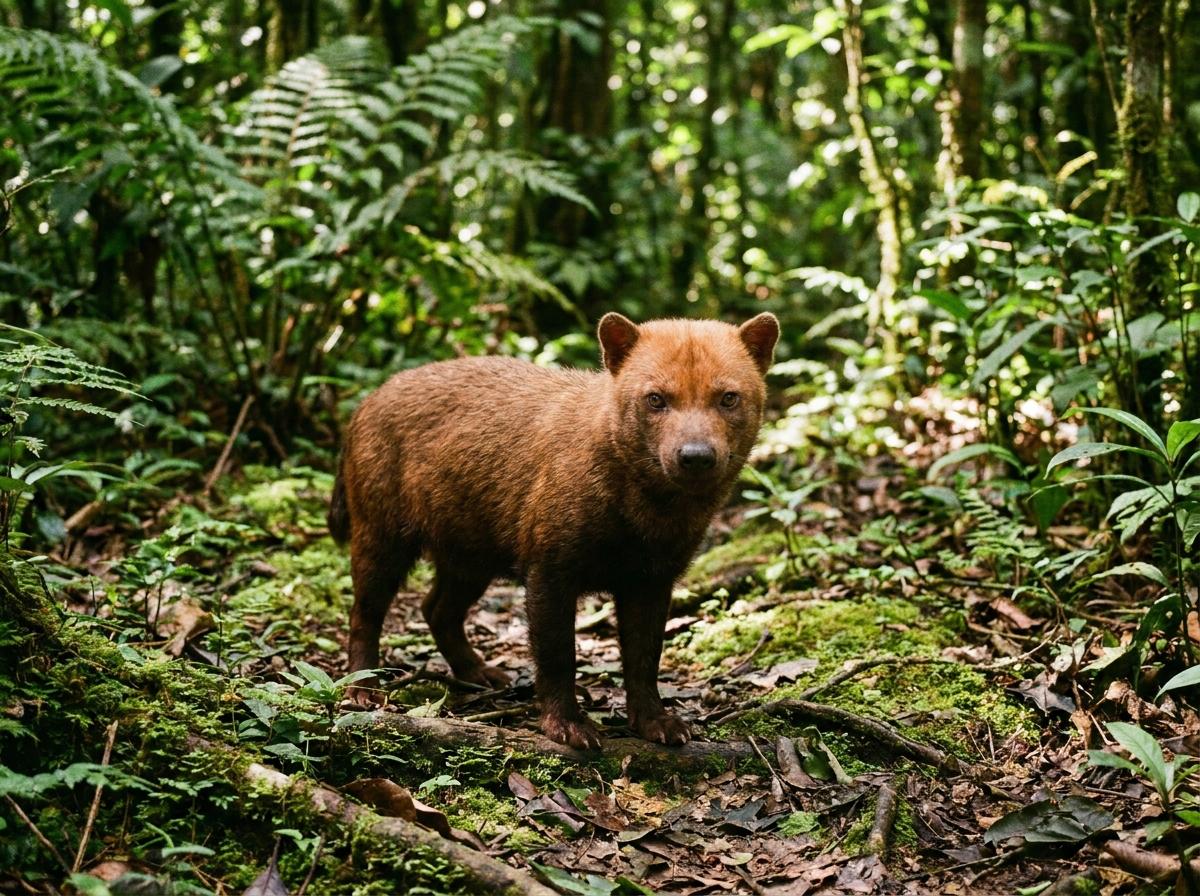
The bush dog (Speothos venaticus) is a small, low-slung wild canid from Central and South America. It has short legs, a long body, rounded ears, a short tail, and partially webbed feet that suit travel through wet forest, savanna, and river-edge habitats. Bush dogs are more social than many small carnivores, hunting in pairs or groups and taking prey such as rodents, pacas, birds, reptiles, and sometimes larger animals. Their secretive habits make them far less familiar than foxes or domestic dogs.
Zoos and conservation programs manage bush dogs in social groups with secure yards, dens, visual cover, and water features for swimming or cooling. Care teams watch introductions carefully because group structure affects breeding, stress, and aggression. Diets are carnivore-based and may include whole prey or structured feeding enrichment. Field work often relies on camera traps, genetic sampling, and reports from protected areas to understand distribution. Habitat loss, road mortality, disease exposure from domestic dogs, and hunting pressure are practical concerns across parts of the range.
Colors: Wild Type