

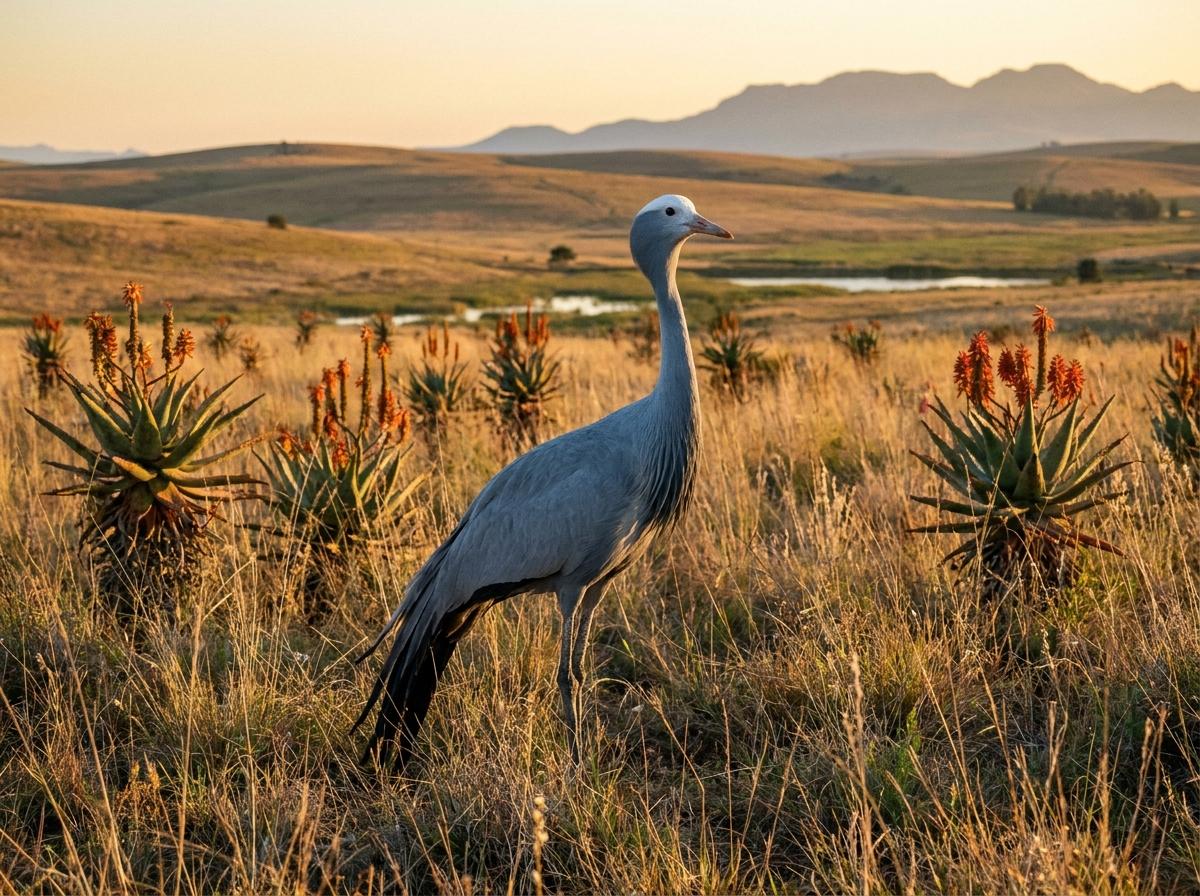
Blue Crane
Anthropoides paradiseus
The blue crane, Anthropoides paradiseus, is a pale blue-gray crane native mainly to South Africa, with smaller movements or records in neighboring countries. It has a rounded head, long neck, trailing wing plumes, and an upright stance suited to open grassland, cropland, and wetland edges. Pairs perform calling and dancing displays, then nest on the ground in open areas where visibility helps detect threats. The species is strongly associated with South African highveld and Karoo landscapes.
Blue cranes are managed through grassland conservation, farm stewardship, zoo breeding, and rehabilitation of injured birds. Field risks include power-line collisions, poisoning, disturbance at nests, and changes in grazing or crop practices that remove suitable habitat. Captive cranes need roomy outdoor pens, dry footing, protected nesting areas, and diets balanced for long-legged omnivorous birds rather than poultry alone. Because cranes form strong pair bonds and can be aggressive in breeding season, introductions and transfers should be planned carefully by experienced staff.
Colors: Wild Type