

African Bush Elephant
Loxodonta africana
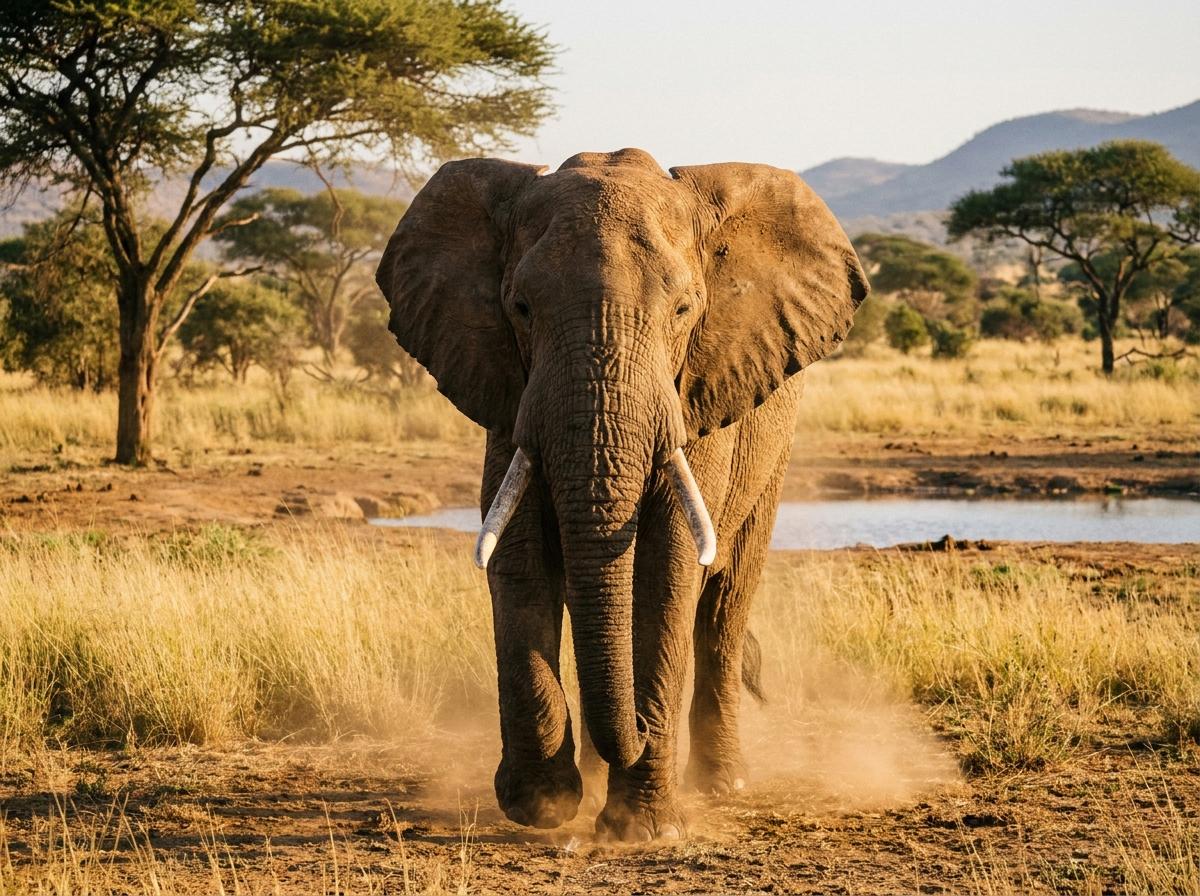
The African bush elephant (Loxodonta africana), also called the African savanna elephant, is the largest living land animal and the broader-ranging of the two African elephant species. It inhabits savannas, open woodlands, floodplains, and arid regions across parts of sub-Saharan Africa. Large ears, a sloping back, a trunk with two finger-like tips, and generally long outward-curving tusks separate it from the smaller African forest elephant. Herds are usually led by experienced females, while mature bulls range alone or in loose male groups and enter musth during breeding periods.
People manage bush elephants primarily through reserve stewardship, anti-poaching work, conflict reduction around farms, and coordinated zoo or sanctuary programs. In professional care they require large, complex spaces, social choice, protected-contact training, and constant attention to feet, joints, tusks, and dental wear. In the field, conservation teams track movements with aerial surveys, collars, camera traps, and community reports to plan corridors and reduce dangerous encounters at water points or crops. The species is classed as endangered, with threats including ivory poaching, habitat fragmentation, drought, and expanding human settlement.
Colors: Wild Type